Showing posts with label logic. Show all posts

Tuesday, August 11, 2015

I've Been Here Before: The Manuscript Argument

This theme/series is something I first started in September of last year, with this introductory article. My idea is simply to transparently show what articles I distinctly remember having a powerful influence on me in my process of investigating truth claims beginning in 2010. Each of these articles will be presented in chronological fashion.

So far, I pointed out the "articles we should not use" link from AiG (at the above blog post) as the first epiphany I encountered, which immediately demonstrated the intellectual honesty of Answers in Genesis. Subsequent to that, I looked at their Statement of Faith. Keep in mind that I wasn't doctrinally reformed at this point. But I could tell they weren't complete crazies, so I decided to tentatively trust their claims, but be ready to question the more extreme assertions. And so I did.

For the next week or two, I spent dozens of hours poring over 'the creationist view' of nearly every secular scientific dogma I'd been exposed to since I was old enough to read. What impressed me most was that I wasn't, largely, told "new information." Instead, the articles used what I already knew, and appealed to my common sense to explain it better. The more I kept reading, the more persuasive it all became. But something began to nag me, and that was that though the point of view was internally consistent, one thing was totally taken for granted in every article: the inerrancy and authority of the Bible. Each article made copious reference to Scripture, but within-article, the interpretation and reliance on those Scriptures was never defended. The implicit argument seemed to be, "IF you believe the Bible is true, and the Word of God, THEN you will logically come to believe what we present in our articles." It was a challenge. I was prepared to believe the Bible is God's Word and inerrant, but now I had to go make sure, and find out for myself.

First, was there enough evidence that the Bible was written when it is said that it was written, and that the original texts say what the modern copies/translations say?

The answer to this comes by way of the Manuscript Argument

That link is dated later than I would have read it, but I recognize the content as something similar/identical to what I actually read in Marc/April 2010.
 Simply put, if we take seriously that other historical documents about other historical figures are truthful in that the events they describe really took place when they say they took place (Herodotus, Caesar, Pliny, Josephus, Aristotle and Plato, etc), then by the same standard of assessment, there is no logical reason to question whether the Bible was actually written at the time period which the Bible's writers indicate that their respective books were written.

And as to whether we can be sure that what the Bible we have now says what the Bible of 70 AD said, if we can believe that what is attributed to Aristotle was written by Aristotle, then we can believe that what is attributed to Paul was written by Paul -- since there are 100 times as many New Testament copies as there are copies of Aristotle's works.

The principle of applying an equal standard of historical scrutiny leads to the confident conclusion that what the Bible says is what the Bible has always said, and that the attributed writers really are the ones who wrote the book, meaning that they were indeed eyewitnesses to their claims.

After demonstrating the historical authenticity of the texts, the next logical question is: does what the texts say, logically contradict, or is it coherent? I dove in headfirst. I went looking for alleged contradictions, making sure to leave no stone unturned. There had to at least be a plausible explanation to resolve each one, in order for inerrancy to be a valid conclusion. And the careful scrutiny of these claims is what I will summarize in the next IBHB article. An address of the many alleged Biblical contradictions.

Stay tuned.

~ Rak Chazak

Saturday, August 8, 2015

Text Treatise: Epicurus and the Problem of Error

The Problem of Evil is often easily explained by reference to the ancient Greek philosopher (mentioned by way of identification in the Bible, in Acts, where there were Epicureans and Stoics who wanted to debate with Paul) Epicurus, whose pithy presentation is presented below:
 

The problem with the Problem as stated is that it does not take into account time. Perhaps God does want to destroy evil, and will, but for the time being has a sound rationale for allowing it to persist. This is, in fact, justified by the Bible:
"The Lord is not slow to fulfill his promise as some count slowness, but is patient toward you, not wishing that any should perish, but that all should reach repentance." 2 Peter 3:9


There is also the question of evil being a necessary side effect of the free moral agency of mankind -- Love is given freely by an act of will, so making perfectly functioning automatons which lack any aspect of generosity, grace, compassion, or desire is inferior to a creation that includes beings which have the capacity to love others -- and with it the requisite capacity to choose not to.

But moving on from that, here is "The Problem of Error." It is something worth considering for anyone who claims to be Christian but does not regard the Bible as the inerrant, word for word Word of God.

Did God author the Bible, or men?

If God is not the author, then there is no guarantee of its truth.

Moreover, can God lie?

If there are untruths in the Bible, either God lied, or God is not the author. In the first case, such a being is not to be worshiped or obeyed. In the second case, who knows whether the Bible accurately depicts God or His moral Law truthfully? There is no way of knowing, so there is no reason to give it any greater weight than any other human document.

In conclusion, either God is the author of all Scripture, or it has no authority over the activities of men. And if it has no authority, why heed it?


Either the Bible is inerrant, or you have ZERO justification for the authenticity and veracity of the Christian faith. Which is akin to saying that a Christian has no reason to believe Christianity if they don't also believe the Bible. They are like all the false religious adherents in that their "feet are firmly planted in mid-air." They may be saved, but they're still being foolish.

And in many cases, they're not saved. If you believe God exists, how hard is it to believe that God can make sure that His will is known with 100% accuracy and reliability? It really isn't. So non-belief in Biblical inerrancy, while it doesn't force the conclusion that a person is a false convert (i.e. they claim to be a Christian but they aren't saved), but it is certainly strong and worrisome evidence in favor of that conclusion.

'Which is why it's so important for people to think through this issue and get with the program.

~ Rak Chazak

Sunday, July 19, 2015

"We Can't Be Sure if He Was Tied to A Terrorist Group"

A young man recently killed 4 marines at a recruitment center.

The news media has been telling me, every time I've heard of this since that event took place, that they just can't figure out what his motivation was. Most explicitly, they've said that they can't be sure if he has "ties to a terrorist organization," or "ties to ISIS."

Excuse me, but isn't this missing the point? I doubt it matters whether a drive-by shooting has ties to the Crip gang, Hell's Angels or the Italian Mob for it to count as gang violence. It either is, or isn't. Likewise, it's either terrorism or not terrorism -- whether he has "ties to an existing terrorist organization," while useful for preventing future attacks, is a massive red herring. It's as if the talking heads think we can't call it terrorism unless the guy went to Syria to be trained by ISIS.

Well, what would help you to decide whether he engaged in terrorism?

Tuesday, July 14, 2015

A Tale of Two Pain-Killer Advertisements.

I've always found myself offended by commercials that don't actually explain why their product is better than another -- let alone prove it -- because I realize that they operate on the concept of impressions. That is, they hope that the commercial itself will be memorable, so that when you remember the commercial -- because it was amusing, exciting, original, etc -- your mind associates the memory with the product. For a simple example, someone trying to cheer up someone else by saying "put a smile on" could result in that person saying, "hmmm, you know I am actually in the mood for some McDonald's."

The business incentive is that what people remember better are images and feelings (what something on TV looked like, or how it made you feel) than they do specifics of nitty-gritty facts, like whether Flonase blocks neutrophils, leukotrienes, histamines, etc (these all show up on the screen for their commercial but the persuasion is far less heady than that. It's a simple "we have 6, the competition has 1. We're better, yay! Buy our product").

The idea that someone's trying to get around my conscious decision-making apparatus and try to get me to buy something not because it's a good choice, but because it's the only product in that category that I can remember by recalling commercials, is insulting to me, because I've always preferentially gravitated toward what I can determine to be true and right and good, rather than what merely makes me feel good or what seems popular.

Plot Twist
Similarly insulting is the "identity politics" of various political movements in vogue at the moment. This is not limited to liberal/leftist/democrat agendas, but they are by far more invested in splitting their constituent demographics into groups and targeting single-issue messages to each one of them. When a political figure says "I think you're too dumb to think about more than one issue at a time," it insults me. But it must work, because candidates for both parties generate massive applause by doing what's called "doling out red meat." The primary season for the Republican 2016 field is getting ramped up, and examples of this include people shouting "God bless America" at the end of the speech, as if that's supposed to make every Christian want to vote for them, regardless of what else they said. But democrats are even more insidious, because they don't just utilize identity politics, they are far more effective than republicans at capitalizing on resentment, envy, hatred of 'the other,' often playing their constituent groups against each other. 

One way they insult you is by pretending that seeing more people "like you" represented somewhere, be it among Olympic sports teams (how many Americans are Olympians?), on television (how many of us are TV stars?), on news broadcasts (how many of us are journalists?), etc, that this will somehow improve your life. This is the insulting lie they tell women, blacks, hispanics and homosexuals, among other groups: that without doing anything significant to improve real life for the vast majority of Americans belonging to those groups, they agitate for rich CEOs to increase the amount of women news anchors, or black film leads, or homosexual sitcom actors, and they do this by telling the constituency to be angry that there aren't "more of them" represented in those positions.

The rich people shuffle the deck, the democrats claim victory, and the constituency feels satisfied with the result of something that does diddly squat to improve their life or liberty. And one simply must ask, "do they really think people are that dumb?"

Apparently they do. Whether people are that dumb depends on how representative the many people who happily follow along with this identity politicking are of the sum of the constituent groups in question.

My Point
And that's why a marketing department can propose this advertisement for an over-the-counter painkiller.

A lot of the promotion of homosexuality in television has been seen as "brave" or "bold," ostensibly because so many people are against it that it must be difficult or risky to endeavor. I suppose that means that the makers of this advertisement likewise think that there must be wide swaths of America that are Adoption-Racists, who don't think people should adopt kids who aren't of the same "race," judging by the still shot alone. It's hard to figure out the reasoning of people who don't expect you to be intelligent. What are they really expecting the response to be?

Well, the clear intent of this Tylenol commercial is to say "gay men raising children are just as good of a family dynamic as a man and woman, therefore, buy our product."

What does a painkiller have to do with homosexual households? Shouldn't I get a painkiller based on whether it reduces my pain? But nope, not according to Tylenol. They're banking on the fact that you don't buy painkillers for any scientific reason, but because you want to support the message and corporate policy of the company that creates the painkiller. They are hoping that you will think, "this company advocates for a single issue that I happen to agree with, so I will buy their product to increase their quarterly profits, to send the message that the American people supports their political views."

In contrast, another common painkiller, Aleve, uses this argument:

Aleve works better than Tylenol or Advil. All day long, all day strong.

It might be true, it might not be, but at least they're making the case that you should buy their product because it works.

Perhaps Aleve's corporate bigwigs are just as pro-ssm as Tylenol's are. That's not the point I'm making here. The point I'm making is, the way in which large companies advertise their products is based on how they are rewarded.

If an ad spot generates more revenue by making a scientific argument: "our product works and is better than the competition's," then they will keep doing that.

If an ad spot generates more revenue by making a political statement: "gay marriage, yay!" then they will keep doing that.

Takeaway:
The increase in recent days of similar ads, which portray happy homosexual couples (together with blended families and "interracial" couples, as if those things were morally controversial) being 'just like everyone else,' bottle-feeding babies and living the American Dream, seem to demonstrate that when it comes to the Public's response to advertisements, the People are thoroughly committed to rewarding rich people who treat them according to "identity politics," rather than rewarding people who encourage them to think and make decisions based on what works.

The consequences are readily apparent to that proportion of us which prefers to think.

~ Rak Chazak

Thursday, June 4, 2015

Subjective Experience vs. Materialistic Determinism

What if everything in the universe obeyed strict mathematical laws, and nothing -- not even personal volition, not even subatomic phenomena -- allowed for random chance?

Chance, here defined, is actual uncertainty about an event, such that if you knew the location, velocity, energy level and exact dimensions of every particle in the universe, and modeled reality in a hypothetical supercomputer, that you would not be able to predict the future with accuracy.

Materialistic determinism requires that if you somehow knew everything there was to know about this exact instance in the present, then you could know everything about the future and even the past, simply by mathematical modeling of the pieces that make up the universe. Their obedience to physical laws guarantees that you can know exactly how they will interact, with no randomness, leaving nothing to chance.

Generally, when we say that something is random, or a result of chance, it means that we can't predict it with the models we have and the knowledge of the universe that we possess. This is randomness from a human perspective. But real randomness -- absolute randomness -- does it exist?

Let's suppose it does not, and engage in a thought experiment.

***   **   **   ***        ***   **   **   ***        ***   **   **   ***

Wednesday, June 3, 2015

Bayes' Theorem

I ran across something that I wanted to share, some time ago. I figured I'd read it and write a handy little summary if I could, but I'm distracted by the need to commute and so I don't have the time to attempt to reacquaint myself with probability statistics. I do nevertheless find the field interesting and it has useful connections with the field I'm going into, so it'll be valuable to dust off my STAT book one of these days.

Bayes' Theorem is explained somewhat here: http://en.wikipedia.org/wiki/Bayes%27_theorem

It is a mathematical method for assessing the likelihood of one event based on the probability of a related phenomenon. As it turns out, a professor once wrote an analysis of the statistical likelihood of the Resurrection based on the prevalence of eyewitness evidence. As of this post, this link to it was still active: http://www.thewarfareismental.net/b/wp-content/uploads/2011/02/depoe-bayesian-analysis-resurrection.pdf

I'll leave it at that, because I can't assess it very much nor give the holistic explanation I like to do, without further review of statistics. My thought process is logical but not mathematical. My visual-abstract reasoning needs to put in more effort to convert the numerical representations into "brain language." In essence, I'm translating mathematics into words and images in the process of learning it. But I may one day return and give more capable explanation of this interesting topic.

But suffice it to say: based on the number of direct eye witnesses to the event, as demonstrated by the recorded history, we can be perfectly statistically persuaded that the Resurrection took place. With the strength of mathematical analysis behind our conviction.

~ Rak Chazak

Wednesday, March 11, 2015

People Who Accuse Others of Victim-Blaming Are Demeaning Women

Victim Blaming: Accusing someone on the receiving end of some calamity to be responsible for its occurrence. 

ex: "Telling women not to put themselves in situations where they might be sexually assaulted is blaming the victim. The only thing that causes rape is rapists."

Often heard from: feminists, "social justice warriors," change advocates of various kinds that are commenting on violence or gender related issues.

Please see my treatise on why this argument is only half true, and ultimately hurtful despite its being (maybe) well-intentioned: Treatise: Third-Wave Feminism's Irresponsibility Double-Standard

*  *        *  *        *  *
So how does accusing someone of "victim-blaming" demean women?, I'm sure you're dying to know.

I'll answer. But first let me clarify that it's certainly possible to be legitimately at fault for blaming victims, which is wrong.

Scenario A: "She should have known better. By getting wasted drunk around a bunch of frat guys, she brought this on herself."
Verdict: Victim Blaming. Disgusting assertion that she's responsible for someone else's sins against her.

Scenario B: "Rapists bear the full responsibility for their own actions. Even so, it's wise to be aware of risks and take action to mitigate your exposure to them. Please consider the way you dress, the people you socialize with, whether you walk alone, whether you carry mace/air horns/a gun, and whether you overtly sexually entice men around you, as ways to help protect yourself."
Verdict: Not Victim-Blaming. You can take action to protect yourself without implying that you're responsible for what others do to you otherwise.

And yet, this is often attacked as "blaming the victim" by feminists in online fora. I submit that this could be because the feminists a) really have no clue how to solve the problem and don't want to believe that they can fix it because that makes them feel uncomfortable and morally conflicted, and b) really resent men and want all the attention and responsibility to be theirs (men's).
  1. Teaching someone how to drive is not blaming the victim if they are involved in a car crash.
  2. Police officers wearing bulletproof vests are not blaming the victims of homicides for their gunshot wounds.
  3. Teaching wilderness survival, gardening, hunting etc doesn't "blame the victims" of famine, starvation, or those who die of thirst or exposure to the elements.
Giving someone tips for how to protect themselves from getting hurt is not asserting that they are responsible for undesirable outcomes, when something happens that hurts them, which are out of their control.

Now that that has been emphasized, there are some direct consequences of this.

When someone discusses rape prevention in the vein of scenario B above, and someone responds to accuse them of "blaming the victim," then that person is actually demeaning women and promoting sexist attitudes that contribute to rape.

Say whaaat? Let me guide your thinking:

Paradigm shift 1
Taking away someone's responsibility takes away their ability. Taking away their ability takes away their power to effect change. Taking away their power takes away their freedom of choice, and makes them helpless victims of circumstance, at the mercy of their abusers.

This is what denying women their right to prevent rape (by denying that they have the ability or responsibility to protect themselves) accomplishes.

Paradigm shift 2
By asserting that rapists are the sole factor in rape**, advocates are denying the woman's responsibility over herself. By denying her responsibility, they assert that women are incapable of doing anything to protect themselves that might actually decrease the chances of getting raped. This makes women out to be defenseless. This view is sexist because it portrays women as weak and ineffective compared to men, who always get what they want because they alone have the power and are the sole determinant of what they will be able to do.

Paradigm shift synthesis
Taken together, the logical conclusions of accusing "scenario B men" of "blaming the victim" is the promotion of the belief that women are incapable, and men are capable. That women are irresponsible, and men are responsible*. That men can rape, but women cannot stop rape. That women don't have the freedom of choice, to choose their own destinies, in the context of whether they will be raped or not. That women are victims, and that men, by contrast, must be victors. That women are helpless and defenseless and at the mercy of the decisions that men make. That men get what they want, when they want it, from whom they want it. The buildup of all these contrasts encourages the subconscious prejudice in both men and women to see women as weak and inferior and men as strong and superior. It is the very epitome of sexism.

Therefore, though promulgated in the name of feminism and the defense of women, any attacks against the character or motive of a man, or the impact of his statements, if he encourages women to seek to protect themselves from the sort of men who would take advantage of them, nevertheless has the effect of PROMOTING SEXISM.

Feminism = sexism. Against women, no less. I could not be clearer.

Women, think twice about attacking any man that disagrees with you about some issue that touches on gender relations.

Men, take courage, and be careful to make sure you speak wisely on this issue. Sexism rules on "both sides," and it is your responsibility, as someone who seeks to honor woman, to fight against the things that hurt her even when it's what she believes with all her heart to be in her best interest.

~ Rak Chazak

* note the equivocation in these terms. It's nevertheless the impact of using these words without clarification and therefore the conclusion is sound.

** Rapists are solely responsible for their choice TO rape. But rapists don't exist in a void and strike at random. This is evidenced by the fact that most rape is "acquaintance rape." Rapists must CHOOSE their targets, and to do that they need motive and opportunity. You have the ability to deny them the opportunity, and to some extent their motives. If you have this ability, should you act on it? Then that is the same as saying that you're responsible for your own actions that can mitigate or exacerbate the risk of being raped. Please read this treatise to see that there are two senses of the word 'responsibility': culpability and personal governance. To say that you're accountable for yourself is not to say that you are to blame for what someone else does to you. The consequences of denying personal responsibility over your choices leads to absurdity.

Monday, February 23, 2015

"Earth is not the Center of the Universe" - Response to Common Bible Attack

Have you heard this comment? I've heard it many times. It's getting pretty tedious. You can almost predict with 100% certainty that if you're in a discussion about Christianity that touches on science, it's only a matter of time before a self-professed "intelligent atheist" tries to lecture the 'ignorant Christians' on how backward their beliefs are. This comment is one of their most favorite ones.

"People used to believe the earth was the center of the universe, but now we have science! and we know that those old Christian superstitions about a God who loves us and makes us the centerpiece of His creation are just old, unscientific stories from a long-lost age of backward ignorance" 

or something like it. Doesn't it sound familiar? Doesn't it sound dumb? Wait, it gets better:

Chronological Snobbery FAIL

The atheist snobbery goes like this:
1. Christians believe God made the universe for them (this is false, by the way)
2. Therefore, Christians used to believe the earth was in the center of the universe, because the center is obviously the most important (importing 21st century assumptions, here)
3. Those idiots thought we were in the center, but SCIENCE has shown that that's not true! har har!
4. Therefore, since SCIENCE leads to truth and Christianity does not, atheism is the rational belief system and Christianity is something to be ashamed of believing.

The problem is, the fundamental premises of the argument are false.

"A common thought in the Middle Ages was that the centre of the universe was the worst place to be. For example, Dante’s Divine Comedy(c. 1310) has nine circles of Hell inside the Earth, getting worse as they approach the center. Satan was right at the centre of a (spherical) earth, at the centre of the universe. In the opposite direction, the nine celestial spheres of heaven increased in virtue and closeness to God as they got further from the center. We certainly do not hold to Dante’s vision, but in this light moving the earth away from the center was a promotion in the eyes of people in the Middle Ages, not a demotion, as 21st century anachronistic skeptics claim." Creation.com, "Refuting Absolute Geocentrism", bold emphasis added.
In other words, 

1. Christians never assumed that their relationship to God meant that they occupied a special 3-D location inside the universe
2. They therefore never assumed they were at the center.
3. Therefore, the fact that we are not "at the center" is not a scientific contradiction to Christian beliefs, whether theological or historical.
4. Therefore, any atheist or other person who makes this claim is blinded by presumptuous arrogance, and they are the ones who are truly ignorant.


Q.E.D.

~ Rak Chazak

PS God made the universe for the demonstration and maximization of His glory. If your reason for rejecting Christianity is that you think it's a belief that coddles people's desire to feel important by saying that everything God does is for your sake, then check yourself. You're even less important than you think you are.

Monday, January 5, 2015

Infinite Regress or Circular Reasoning. Take Your Pick.

There are two problematic logical conundrums that most people try to avoid, and which in most cases you can refer to in criticizing an opponent’s theories. If you can show that their reasoning leads to an infinite regress, or incorporates circular logic, you can trounce their arguments and come away victorious.

An infinite regress is a problem in logic for this reason. A logical proof goes like this:

1. If this conditional statement is true, then the conclusion follows.
2. This premise states that the conditional above is true.
3. This conclusion says that the conclusion in # 1 follows from points 1 and 2.

It has a beginning and an end. But an infinite regress goes like this.

1 If the infinitely distant premise is true, then the conclusion follows from premise 1.
2. Premise 1 depends on premise 2
3. Premise 2 depends on premise 3
4. Premise 3 depends on premise 4
5. Premise 4 depends on premise 5
6. Premise 5 depends on premise 6
7. Premise 6 depends on premise 7
….
Starting to see the problem? If the nth premise as n approaches infinity must be true for the conclusion to be reached, then the conclusion can never be reached, because you can never count to infinity.

In other words, an infinite regress renders a logical proof invalid because the proof is incomplete. It can never be finished. It’s the same as saying this.

1. If A then B
2. If B then C
3. ?

or like this,

1. If A then B
2. it is not known if A
3. therefore, it is not known if B.

It hasn’t been formulated in such a way that the conclusion can be determined. Each of the two above examples are not infinite regresses themselves, but they are what an infinite regress amounts to. A collection of premises with no connection to a conclusion. A series of unknowns and hypotheticals that renders the conclusion unascertainable.

That’s why an infinite regress is logically wrong. Because once you have it, you can prove nothing that depends on the conclusion of the infinitely regressive logical proof. As in the above examples, if you have any other proofs that use as a premise the fact that B is true, none of those proofs can be known to be true, because B can’t be known to be true.

Proof 1:
1. If there is an infinite regress, B can not be known to be true.
2. There is an infinite regress.
3. Be cannot be known to be true.

(this is, ironically, a modus ponens logical proof, and not itself an infinite regress. Fun!)

Proof 2:
1. If B then C
2. B cannot be known to be true
3. C cannot be known to be true.

AND SO ON. Why am I harping on this? What is the issue?

If someone’s worldview depends on a premise that is the conclusion of a proof that contains an infinite regress, then everything they believe is illogical. What? Crazy, right? That’s not to say what they believe may not be true—it may. But they would have no way of knowing, because they could never prove it. So everything they believe is logically suspect. It could all be false, and whatever they believe to be true and false, no matter how logical the individual proofs for those beliefs may be, is ultimately grounded in uncertainty—feet firmly planted in mid-air.

And now, to make this real:

Sunday, September 21, 2014

Becoming a Christian Takes Work. ( Criticism of "Intellectual" Atheists and Others)

Staying atheist is certainly the more convenient option, if you are lazy. And let's face the facts, most people who live in the West and don't have faith in Christ are definitively lazy.

You have access to more knowledge in a day, without leaving the chair you're sitting at right now, than most people prior to the printing press had access to in their entire lives. A daily newspaper nowadays would be a month's worth of word-of-mouth overheard from travelers as they passed through your town.

The amount of time it took to copy a book just once was the amount of time it took for a person to gather together enough blank pages, ink, not to mention also a copy of the book, and then for him to rewrite every word on the blank pages, before binding the book and starting anew. Knowledge spread very slowly in a horizontal fashion (from one person to contemporaries, people alive at the same time), and knowledge spread through tradition, from parents to children (vertically) was much more effective. Consequently, a person's ideas could take a century or more to catch on, and they'd never live to see the effect of their work. But now history has come to a remarkable place.

We can access anything that anyone anywhere has found out about the past or found written in the past, so long as it has been transcribed or photocopied onto the Internet -- which is to say, any computer or database connected to the Internet information highway, so that anyone else can access the information as long as they are also connected.

And despite all this, the vast majority of people REFUSE to use the Internet to learn anything important!

You there, o atheist. You who have the knowledge of all the world's history at your fingertips, day in and day out, do you go looking for information that confirms and points to the Bible being true and its admonitions having the force of an ultimate Lawgiver behind them? Do you try to prove the Bible and do you go looking for evidence to utterly convince you that Jesus Christ is God, you are a man of sin, you need to repent, and you deserve His judgment but are utterly at the mercy of His unmerited favor in order to escape?

You can't make this claim. And I know from experience (the other benefit of the Internet is that it allows you to sample large amounts of people at a time to see how they think and consider their personal testimonies) that most people who are atheists are not so from being scholarly, studious and disciplined. They took the first lame reason to reject faith they could find, and clung to it, and now they're monstrously irrational and as a consequence of choosing not to think, CAN NOT think.

Monday, September 15, 2014

Texting Treatise: Pragmatism is Impossible in an Infinite Universe

"Just came across a tidbit on the traveling atheist that has interesting implications. It's a conditional that applies to anyone who'll say that the universe is infinite in either time or space or both, and for whom morality is defined as doing the greatest good for the greatest number of people. And diminishing suffering. That's actually logically incoherent.
In an infinite universe, there'll be an infinite amount of happiness and an infinite amount of suffering, so nothing you do will have an impact on the total number of either. Consequently, a morality based on the greatest benefit for the greatest number CANNOT BE TRUE if the universe is infinite in any aspect. It is logically contradictory. Therefore, the moral imperative for doing good rather than evil CANNOT just be a pragmatic decision. It must be justified some other way.
'Love logic."
Afterthoughts:

Tuesday, July 1, 2014

Arrogance, Not Depression or Weakness, is at the Root of Murder

I wrote on this subject in a previous blog post a few months ago, with regard to suicide. The essence of the criticism I had applies to any violent, attention-seeking, self-absorbed behavior. Consider this in reading the following.
 
First up, an excerpt from a booklet I came across that talks all about ego and pride:
“Up until the twentieth century, traditional cultures (and this is still true of most cultures in the world) always believed that too high a view of yourself was the root cause of all the evil in the world. What is the reason for most of the crime and violence in the world? Why are people abused? Why are people cruel? Why do people do the bad things they do? Traditionally, the answer was hubris – the Greek word meaning pride or too high a view of yourself. Traditionally, that was the reason given for why people misbehave.”

….
Daniel Greenfield, the prolific Manhattanite Orthodox Jewish political braniac writing at Sultan Knish, had a lot of the same to say, in harsher tones with more examples. It is well worth checking out his entire article.
"Evil wants absolute power over others. If it can't rule, it will destroy. If it can't control everyone, then it will enforce absolute control over a few victims by taking their lives. The narcissistic mass murderer is striving to eliminate everyone who is not made in his image. He is a frustrated little godling who wants to be worshiped. He rejects the presence of the rest of the human race because they are different than him. His preferred forms of worship are conformity and death. Evil is not limited to the occasional spree killer. In the last century Hitler and Stalin oversaw cults of personality built on this same model under which millions died. Stalin's Communism and Hitler's National Socialism were messy and contradictory ideologies. They ultimately existed so that one man could exercise his power fantasies and destroy as much of the world as he could."


Daniel Greenfield, Evil is the Motive of Evil, SultanKnish.blogspot.com (May 2014) http://sultanknish.blogspot.com/2014/05/evil-is-motive-of-evil.html

Timothy Keller, The Freedom of Self-Forgetfulness, 10Publishing (2012)
 
In short, my view as expressed in "Text Treatise: Suicide's Real Victims"  is not peculiar to me. There are others saying the same thing, in more convincing ways perhaps, depending on what sort of approach a person is more prepared to listen to. The bottom line is that there are no excuses for murder, and the modern cause of trying to find "reasons" and deal with those as if their removal or reform would fix the problem utterly miss the point and that is that it is the heart of the individual that needs to change, not their outside circumstances. You can never control the stimuli, so that pursuit is a fool's errand. It's far easier to change one mind than it is to change the millions of things that can be dredged up as excuses for that mind's actions.
 
But there is only one way to really change a mind. And only God can do it.
 
~ Rak Chazak

Monday, June 30, 2014

Irrationality in Regeneration: A Source of Relief

Lemme explain some terms before I start:
  • Something irrational is something that can’t be explained, for which there can’t be discovered a reducible reason WHY something is the case/is happening, by using logic. (Something is reducible if it can be broken down into parts—a bike can be reduced to a collection of gears, bolts, chains, wires, metal frames etc;  abstract reasoning is broken down the same way, just with premises, reasoning mechanisms, etc)
  • Regeneration is the phenomenon that occurs when God initially “changes a person’s heart,” as only He can do, that alters their instinctive desires and motivations. I’m not more than a lay theologian of 3-4 years going, but in my understanding it would be inappropriate to refer to regeneration as a continual process after a person’s saved—that would be sanctification. But regeneration’s effects are felt continually, and become more pronounced the longer a person is sanctified. But there’s an initial period that the affected person can point to as the moment when things changed. That’s when God ‘regenerated’ their soul, awakening them to receive the gift of salvation by faith in Christ.

To the point: when I began my investigation into Biblical Christianity (having had a nominal belief, at least, for as much of my life as I can remember up to that point) in early 2010, I came upon a philosophical challenge: is my motivation pure? Specifically, the motivation to do good. Consider the materialistic-reductionist view: everything you do to help others, which appears to be altruistic, is ultimately done for a selfish reason on some level. And if you can’t figure out what that reason is, it’s still reducible to a conditioning of your brain from previous behavior. You help others because you want to feel good from helping them—and therefore, your actions are not unconditional, they are self-serving. Your act of helping someone else is merely the way through which you satisfy your own selfish desires to feel good about yourself by riding the boost you get when you do something nice for someone else. You never help someone just to help them. You’re merely using them to get to your real goal.
 
‘Probably something the atheist economist-philosopher Ayn Rand would be all on-board with, since she held that people were utterly selfish, no exception—although she considered that a good thing. Selfishness (or as likeminded libertarians would put it, self-interest) is held up as the highest good in various areas of modern thought. Can you think of anything more anti-Gospel at the core? Selfishness is good, and nobody is truly altruistic; doing good for others is fundamentally selfish in itself?
 

Thursday, June 26, 2014

The Fallacy of Approaching Faith from a Purely Philosophical Angle

I'm trying something different with this post. This is a segment of a journal entry I wrote at home. In a short page, I managed to carve out a concise criticism of the "Philosophy Alone" approach to theology. Many modern atheists and other nonChristians tend to say they're open to the idea of a God but can't be sure. There's a reason they can't be sure, and it's because they've decided to keep God in a box--the box of philosophy. Philosophy can be a great tool, but the world is more than abstract concepts. It is a world of material objects, and a world with a history in time. Philosophy is important but an analysis of history and the material realm cannot be ignored if the truth is to be discovered. People are generally unwilling to consider that historical facts and scientific evidence could confirm Biblical Christianity. This is nothing but foolishness.


Did it make you think?

~ Rak Chazak

Tuesday, June 24, 2014

The Big Education Blame-Game Irony

I’ve recognized this for a long time, and I was gratified to see Ken Ham tackle the issue in almost exactly the same way I’ve “put it” in my own mind when thinking about it. It’s just sheer logic. What is the issue? It is the accusation against Christians, in particular home schoolers and young earth creationists, that these people, by perpetuating their beliefs, are somehow the cause for America’s lackluster showing in educational pursuits, among the general public especially. But the problem with the accusation is that the vast majority of people are not influenced by these teachings—creation, conservative homeschooling, Christian theology. How can minority beliefs be to blame when most people in the country receive 6 hours a day, 5 days a week of government-approved education? Obviously if anything has the most influence, it is this. So if America is poorly represented, wouldn’t the biggest influence in education have the biggest share of the ‘blame’ for whatever the result is? Logic would dictate that to be the case. Anecdotally, the home schooled kids I ran into at college were invariably the best-performing and composed a larger proportion of honors programs and scholarships than anyone else. And then there are fascinating tidbits of information like this: subsequent to the impositionof mandatory public education, literacy rates in Massachusetts dropped and have never recovered. But this is unacceptable to those who want to believe that the government provides for the people, and that Christianity is a net negative force in culture. Why would they want to believe this? It’s simply that having to admit the alternative would suggest the intolerable: that there is a Creator, and if there is a Creator, there is a Lawmaker, who sets the rules of earthly conduct, and if there is a Lawmaker, there is a Judge, who will punish those who break His law, and that means that people have to choose between undesirable punishment and undesirable denial of the things they want to do (sin)—and so the bottom line reason of why anybody refuses to acknowledge that Christian teaching is a good thing, or even that it is not a negative thing, is that they are in rebellion against the Creator. Unsurprising then, that the foundation of the recognition, as I laid out the steps to above, the doctrine of creation, is the most-targeted doctrine of Christianity among academics and pundits who promote government education and secular indoctrination. One such person who recently targeted Creation was dealt with succinctly and wisely by Mr. Ken Ham of Answers in Genesis: through constructive mockery. Here’s the link to the article, followed by an excerpt:


Ken Ham:

Percy also states, “When we wonder why America is falling behind in science education, it is because places like this are allowed to exist.”

I had to laugh when I read this ridiculous, unfounded outburst. Think about it—the majority of kids in the culture (including 90 percent of kids from church homes) attend the public education system. This system threw out the Bible, prayer, and the teaching of creation years ago. Evolution and millions of years is taught as fact in the public schools. Public school textbooks arbitrarily define science to not allow the supernatural from having anything to do with the universe but insist the universe came about only by natural processes: naturalism is atheism.

The point is, if America is falling behind in science education, how could it be the result of a place like the Creation Museum, the only major such museum of its kind in the world (though there are a few small creationist museums)? The majority of kids are educated by the public education system, and there are numerous secular museums across the country that teach evolution and millions of years as fact. Most science programs and documentaries on secular television (e.g., Discovery Channel, History Channel, PBS, etc.) present evolution as fact over and over again. And Percy thinks biblical Christians are responsible for the nation falling behind in science education? His statement is laughable.

Afterthought:

“Be very sure of this–people never reject the Bible because they cannot understand it. They understand it too well; they understand that it condemns their own behavior; they understand that it witnesses against their own sins, and summons them to judgment. They try to believe it is false and useless, because they don’t like to believe it is true. An evil lifestyle must always raise an objection to this book. Men question the truth of Christianity because they hate the practice of it.” – J. C. Ryle


~ Rak Chazak

Wednesday, June 11, 2014

Random Thought: An Ad Absurdiam Reason Why God is not Female

I was singing a line to a hymn in my head when I stumbled upon an obvious realization. “When He shall come with trumpet sound, oh, may I then in Him be found.” If it’s easy for people to mock true religion now, for “things hard to understand,” just imagine the fodder for immature minds that would be provided if God had in fact revealed Himself as a woman, or having a “female” nature. “When She shall come with trumpet sound, oh, may I then in Her be found.” Can we agree that the imagery connoted by saying that you’re “inside” a female God is at best problematic, and at worst, so tied to sexual euphemisms that it seriously gets in the way of properly thinking about God—even if it was the case, in this alternate reality we’re envisioning, that He revealed Himself as a Heavenly Mother? God is a woman, and we want to be in Her…inside Her? So many wrongs. Take the phrase, 
10 Do you not believe that I am in the Father, and the Father in Me? The words that I speak to you I do not speak on My own authority; but the Father who dwells in Me does the works. 11 Believe Me that I am in the Father and the Father in Me, or else believe Me for the sake of the works themselves.
~ John 14:10-11
, which would if God revealed Himself in feminine terms be rendered, "My mother is in Me and I am in My Mother"], as a ridiculous example. Though a female God would probably have shown up as a female Jesus, but still. Something about the language of being “in Him” excludes a sexual context from consideration, so it’s just transparently easier to understand than the alternative. Here’s my parting thought: God is transcendent, which means that though He is so great as to be unable to be understood completely, He is fundamentally able to be understood rightly, on multiple different levels, no matter your knowledge or intelligence. This seems to me like a satisfactorily simple example of just one more reason why God could have validly chosen to reveal Himself in masculine terms. And indeed, probably something that in actual fact crossed His mind in making that decision, since it crossed mine and He created me and knows my thoughts…just saying.


~ Rak Chazak

Wednesday, April 23, 2014

Don't Say "I Don't Have A Problem With Gay People"

The people who say this are invariably those opposed to homosexual marriage, or homosexuality per se. Yet, since behavior and identity are closely intertwined among people in this part of society, it seems to them as if you really do have a problem with them, and are being a lying hypocrite.

                So, don’t say “I have no problem with gay people” because it makes you look like a hypocrite to them. They think that if you have no problem with them, you won’t have a problem with their homosexuality, because they personally identify with it, and don’t separate it like you do. So it’s unhelpful to allow them to conveniently write you off as a doublespeaking bigot. 

Let's put it the other way. There are some who will say that they have no problem with Christians, or that they value the First Amendment, but then turn and say that they don't think Christian faith and doctrine should influence government policy, and that "you can believe whatever you like, as long as you keep it to yourself." This is essentially the same experience that homosexuals have had with others telling them to "stay in the closet" and hide a part of who they are out of shame.

Why would we treat others the way we don't want to be treated? This is the opposite of the Golden Rule, which is that we should treat others the way we DO want to be treated, even if we are not treated that way. The fairness toward others is a witnessing tool. When people realize you're treating them kindly and that you're not obligated to (or even that they're not deserving of it), they are more apt to listen to you.

But saying that you don't have a problem with gay people is not a kindness. It is confusion. True kindness would be to say in unequivocal terms, "I believe homosexuality is a sin, but I do not hate you for who you are. Instead, I love you in spite of who you are, because that was what Jesus Christ did for me." Then go on to say that because you believe it's wrong, it would be unloving to encourage someone to do or be proud of what is wrong and harmful for them. True love shows itself in correction. When you demonstrate that you love them to the point of being hated and harassed for pleadingly showing them the way to be saved, you give the Holy Spirit an avenue to open their hearts to the Gospel. They'll see that you're not motivated by love of self but that you sincerely care. And some will still reject you. But at least they will not do so because you were an offense, but because the Gospel is what offended them.

~ Rak Chazak

Tuesday, April 22, 2014

Possible Explanations for Distant Starlight in Creationist Cosmology

 There are two relativistic problems in explaining why observations in the universe are the way they are. One is for the evolutionary model of cosmology, resting on the Big Bang hypothesis, which is called The Horizon Problem. The other is for the main opposing view, which, due to its affirmation of a young age to the entire cosmos needs to somehow explain why light from sources billions of light-years away can be seen on earth if only c. 6,000 years have passed since the beginning. This is called the Distant Starlight Problem. There are various solutions proposed for each problem, by the proponents of each view of the universe: the evolutionary model and the 'creationist' model. Below are short quotations from scientific articles in Creation literature to introduce you to the main proposed solutions and give enough of an explanation of each to give you the big idea of how they deal with the issue. Links to the articles themselves are included for your convenience and to give you the opportunity for further in-depth study.

*     *     *     *     *

"...the speed of light may have been much greater in the past (Norman and Setterfield 1987), that Einstein’s general relativity with appropriate boundary conditions (Humphreys 1994, 1998, 2007, 2008) or with appropriate extensions (Hartnett 2007) can accommodate a young Universe, and that the problem itself assumes an arbitrary choice of convention for synchronizing clocks (Lisle 2010; Newton 2001)."
source

"The idea that time may have run at different rates in different places in the universe (“time dilation”) is a central feature of some recent creationist cosmological models (Hartnett 2007; Humphreys 1994, 1998, 2007, 2008). This is used to solve the distant starlight problem, and further investigation into these models may conceivably lead to explanations for some of the phenomena described above. For example, many of the observations relating to galaxies and their stellar populations could be explained by a model that has billions of years passing within those galaxies before the light that we see was emitted."
source

Humphreys explaining his model:

"Again, let’s imagine that God sets the values of the three factors in eq. (24) to give a contraction speed of –c. As each galaxy emerges from the receding timeless zone, it resumes emitting light. Some of the emitted light will be going inward toward the centre. Because the timeless sphere is moving inward at the speed of light, the inbound light will follow right behind the sphere as it shrinks. When the sphere reaches zero radius and disappears, the Earth emerges, and immediately the light that has been following the sphere will reach earth, even light that started billions of light years away. The stretching of the fabric of space has been occurring continuously all along the light trajectory, thus red-shifting the light wavelengths according to eq. (21).

On Earth, it is still only the fourth day. An observer on the night side of the earth would see a black sky one instant, and a sky filled with stars the next instant. With a telescope he would be able to see distant galaxies having suitably red-shifted spectra."
source

"The new metric I derived in 2007 has yielded several interesting results. One is a straightforward explanation of the Pioneer anomaly. In this paper, it has revealed a new type of time dilation, achronicity. The fundamental cause of achronicity appears to be that gravitational potential becomes so negative that the total energy density of the fabric of space becomes negative. That stops the propagation of light, all physical processes, and all physical clocks, thus stopping time itself."
source

The Pioneer Anomaly:

"A broad class of creationist cosmologies offer an explanation for the ‘Pioneer effect’, an apparent small Sunward anomalous acceleration of the Pioneer 10 and 11 spacecraft. If a large volume of empty space surrounds the matter of the cosmos, so that the cosmos can have a centre of mass, then the matter is in a deep gravitational potential ‘well’. If space is expanding and spreading the matter outward, then the depth of the well is decreasing. According to general relativity, especially a new solution of Einstein’s equations derived in the Appendix (which also deals with Birkhoff’s theorem), the decreasing depth continuously shortens ‘radar’ distances within the well, causing the observed apparent acceleration. The magnitude of the anomalous acceleration implies the bottom of the potential well has not yet risen very far above the critical depth for gravitational time dilation. Thus the Pioneer effect supports the essentials of several creationist cosmologies: a centre of mass, expansion of space and recent time dilation. Big bang theorists, whose cosmology does not have a centre of mass, cannot use this explanation. As yet, they have no alternative theory upon which they agree." 
[emphasis added]
source

Discussion of Light Speed. Excerpt is about measuring the speed experimentally.

"We try another experiment. This time we will have a clock at both ends of the hallway. We will send the light pulse when the clock at our end reads exactly 12:00. The clock at the end of the hallway is designed to stop when the light hits it. We then read the time. This experiment avoids a return trip altogether, and so should give us the oneway propagation speed. But there is a problem. Before we start this experiment, we must make certain the clocks are synchronized. But how do we do this? We can ‘see’ the time on the other clock, but that is because light has travelled from there to here. How long did it take to do that? There is no way to determine whether or not the clock at the end of the hallway is synchronized with the one at our end without assuming how light propagates. So this experiment must assume the answer to the question being asked and so is of no use to us."
source

Riemannian Space-Time implies light could take shortcuts through space.

"This is difficult to illustrate, but suffice it to say that there are two concepts of the "shape" of outer space. One is that it is straight-line (Euclidean), and the other is that it is curved (Riemannian). Based on observations of 27 binary star systems, it appears that light in deep space travels in curved paths on Riemannian surfaces. 2

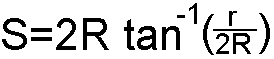
The formula for converting straight-line to curved space is:

where r is the Euclidean or straight-line distance, and R is the radius of curvature of Riemannian space. Using this formula, and a radius of curvature of 5 light-years for Riemannian space, the time for light to reach us from points in our own solar system is practically the same for either Euclidean or Riemannian distances, and there is not much of a change even out to the nearest star (4 1/2 light-years). But if we insert an infinite Euclidean distance for the farthest conceivable star, it would take only 15.71 years for light to reach us from that distance!"
source

These are 3 fundamentally different categories of explanations for how distant light could get to earth within a short time-frame (as measured on earth). 


~ Rak Chazak

Monday, March 31, 2014

Proof of God: The Argument From Possibility

The Argument From Possibility
                I was recently watching another episode of the traveling atheist (‘Closer To Truth’ with Robert Lawrence Kuhn) and the episode focused solely on the ‘Ontological Argument for God,’ or in other words, the argument from existence. Meaning that some clearly obvious facts about existence are taken and used as the axioms in a logical proof that is intended to demonstrate that God’s existence is necessary.

                Why everyone seems to zero in on Anselm of Canterbury’s “that than which nothing greater can be conceived” thought-experiment as the best representation of the Ontological Argument (or synonymous with it, even), is beyond me. At least one person in the episode (the series is presented through interviews with philosophers, scientists and theologians) made the statement that to take Anselm’s pondering on ‘the greatest conceivable being’ and to hold this up as a proof is to stretch it far beyond what it’s intended to do, even by Anselm himself—and he placed the blame on well-meaning but incorrect theologians in time past. What that interviewee said was that Anselm simply suggested that whatever you conceive of a thing, the actual thing itself is by definition going to be ‘greater’ than the conception of the thing. That seems benign enough, and it’s a satisfactory conclusion to me, who has wondered since first introduced why this is held up as the best that Christian philosophy can do.
Wiki Commons image. Alvin Plantinga.
                The last interviewee of the episode, Alvin Plantinga, also made a similar remark about Anselm, that as stated, the argument doesn’t work. But he had apparently developed an improvement of the argument, which he called “The Argument from Possible Worlds,” or something similar. While I didn’t quite follow his construction of his proof, I immediately understood the summary: he said that as constructed, the proof leads someone to be totally committed to the reality of God’s existence as a necessary fact, provided that he begin with the acknowledgement that it is possible for God to exist. For anyone to believe that God does not exist, they would have to claim that it is impossible for God to exist.

*    *     *     *     *

                This immediately made sense to me, because I’d constructed a similar logical proof before. I don’t believe this is the same proof Plantinga’s developed, and I don’t seek to take credit for his idea, but the thought process is similar, and he did remind me of it. Without further ado, here’s the Argument from Possibility.

The Choice

                Like Plantinga’s Possible Worlds, the proof does not unilaterally demonstrate God’s existence. What it does instead is to show that one must choose between the belief that God’s existence is either a fact, or that it is impossible. To believe that it is possible and yet that it is not actual, is to commit a logical contradiction. It is not possible for God’s existence (1) to be possible, and (2) for God not to exist.

Defining Possibility