Showing posts with label science. Show all posts

Tuesday, August 25, 2015

Movie Review: Chappie, Jupiter Ascending, Dawn of the Apes, Divergent

What Does It Mean to Be Human?
Foreword

Each of these big blockbuster movies answers this question in different ways. Perhaps it's a byproduct of our postmodern culture's existentialist angst, but the big-screen movies these days seem to be doing a lot of the following: taking stock of fundamental questions of human nature, civilization, consciousness, matters of right and wrong, etc. If you're watching the action flicks for imagination fodder, you won't be disappointed, but you may miss the overarching plot.

Allow me to invent/define some terms for the sake of this review:

The "plot" is the obvious problem that is directly presented to the audience.
The "sub-plot" is any theme with importance but which may appear to be a distraction at first, since its connection to the plot isn't immediately clear (and if there is no connection, the flow of the movie suffers).
The "meta-plot" is the implicit, overarching theme that the movie makes reference to without ever explicitly addressing. Basically, if you pick out the theme, and ask "what would this cause the characters to be concerned about, or do?" then you have the meta-plot.

Example:
Plot: Simba grows up orphaned and has to somehow right the wrongs that his uncle Scar has perpetrated on the African Savannah.
Subplot: Simba's relationships with his father, Nala, Timon/Pumba and other characters.
Meta-plot: the quest to figure out what's important in life / growing up, becoming a man. Whereas the theme is "manhood," the meta-plot could be summed up as "Simba has to discover something in himself (a sense of duty/honor), and/or find his purpose in life, which will drive him to confront Scar, and help him win."

And the import of the meta-plot is communicated more through the subplot than the main plot. If all you're doing is following along CBS-tv-drama-style, you'll know why the characters are going from one place to the next and such, but you won't grasp the significance, and come away with the real message (intentional or unintentional from the director's/producer's standpoint) of the film.

Let's dive in.

****            ****            ****            ****

Introduction

The last 4 [not-yet-reviewed by yours truly] sci-fi movies I remember watching all had a common theme, explored in very different ways. Dawn of the Planet of the Apes answered the question, "what does it mean to be human?" through exploring the human-like qualities of the fictional ape characters. Chappie asks the question "what is consciousness?" by exploring the journey of learning of a robot, who rapidly traverses formative childhood and copes with the innate badness of human beings as he "grows up." Jupiter Ascending asks, "what is the worth of a society?" or "what makes life worth living?" and answers it through the parallelism of a jaded teenager who feels like she's wasting her life cleaning toilets, compared to jaded interstellar aristocrats who seem to live for nothing but to keep on living. Lastly, Divergent asks whether conformity is necessary for social stability, and asks if suppressing individuality through human government is a) possible or b) promotes peace, or tyranny.

Each film seems to invite the suggestion that how one responds to struggle is what reveals--or defines--one's humanity, and since without struggle, there is no plot, let's investigate the central struggles of these four films.

Last call for spoiler warnings

Thursday, July 30, 2015

I haven't died! (PLU)

Not yet, anyway. After my summer course ended, I've been reviewing various subjects from old textbooks I kept (I never resold a single book at college, figuring there could be some value in the information one day). Then, as my Fall textbooks have been arriving, I went to Staples and grabbed some non-spiral notebooks (so they'll lie flat and not have an irritating ridge in the middle), and I've been going through the early chapters, compiling and condensing the stuff I think I won't remember off the top of my head, and making neat, neat notes out of it.

My Organic Chemistry notebook was done the same way, and I was so thorough and explanatory with it that I've been using it to reteach me, to great success. Organic Chemistry 2, which I have not taken, is a required course for a Chemistry Minor, which I'm going to squeeze in to my course of study. See, because I already have a degree, I don't need to pursue the general education requirements which the program left slots open for, so I can pick other courses to take instead. And as it turns out, all that's required for a chemistry minor is to have a minimum number of courses taken at the university, and a certain number having to be upper-level (300-level and above) courses. And that number exactly matches the slots I have available in between my other classes. (The only question is whether Orgo transfers. I graduated with the class but not the lab (wasn't required), but this university has the lab and class together. It could thwart the minor objective; in that case I suppose I could just retake Orgo once again and get an unquestioned A....then I could pursue a biochemistry major part-time when I become duly employed. I kind of want to do it just to show myself that I can, and that my rocky road the first time around was because of non-academic reasons.

On the subject of not having died, I'm still a little bit skeptical of the accuracy of the blood pressure cuffs at the YMCA, but the values they're giving me are pretty consistent. The across-the-board medical consensus on what's healthy is a blood pressure of 120/80. Either number being less is a sign of above-average cardiovascular health, but higher pressure in either number indicates danger signs for heart issues. The lower number, the diastolic pressure, is the one to watch out for. It indicates the elasticity of your arteries--higher pressure, more trans and saturated fats in your cell membranes, ergo, stiffer arterial walls, meaning that the blood pressure can roughen them, exposing underlying collagen, to which platelets react, then dislodging and causing embolisms. Or not dislodging, and causing atherosclerosis.
[Here's an image] -- comparing the two pressures
The higher pressure indicates the strength of the heart--it is when the stethoscope first hears the pulse, which means that that is how much pressure your heart can generate with each contraction. It's essentially an estimate of the strength of your ventricles, which means that an abnormally high systolic pressure can indicate an enlarged heart muscle, for whatever reason. Conversely, the lower this pressure is, provided you're in visibly good health, the less effort your heart has to put in to do its job.

Yesterday morning, I woke up early enough to start a run at 5:20 a.m. I ran three miles at 7:20, 7:55, 9:35 pace, walked one, and then ran another at 8:35. Heart rate was 161 beats per minute after each segment (the 3-mile and 1-mile). That's a good baseline that I'll use to keep track of how well I'm progressing. The more you run, the better your body optimizes and the lower your resting heart rate, aerobic heart rate, systolic and diastolic arterial pressures will be.

So I was thrilled that the electronic cuff measured my pre-workout blood pressure at 110/57. When I get my physical exam later in the month, I'll find out how accurate those cuffs are.

And in the meantime, I'll keep running. Which requires me to go to bed really early. Days I sleep in are my rest days. My body and I have a two-way dialogue when it comes to exercise. :D

~ Rak Chazak

Wednesday, April 8, 2015

Brief Review of Interstellar

I grabbed the first Redbox movie in a long while and watched it earlier this week.

Interstellar is a film that thrives on making the special effects scientifically accurate -- there's no sound in space, waves are caused by the gravity of a nearby spacial body, mechanical equipment can tolerate lots of stress and collision damage but depressurization catastrophically tears it apart, the sensation of gravity in space must be generated by angular rotation, areas of high gravity play havoc with our straight-line perception of the surrounding space, bigger black holes are better black holes because they won't spaghettify you, the relativity of time is significant when spending time near high gravity ("every hour on the surface is 7 years back on earth" / "this little maneuver will cost us 51 years!"), etc.

The film also leans heavily on the human drama, with success. By that I mean that unlike many sci-fi epics, it doesn't feel forced, or added-on as an afterthought to please the crowd, but that it holds a central role without being uncomfortable or distracting from the plot. Indeed, the human drama is what drives the plot: resource scarcity on earth is what drives Matt McConaughey's father character to take a risk in order to make a better life for his children.

PROs:


  • no sexuality. Not even kissing between the main characters, except one shot in the end between Jessica Chastain and Topher Grace, intended as humor and not depicted sensually
  • no grotesque violence. The violence in the film is realistic and restrained, hardly characterizing the film but punctuating it at key moments to emphasize the heightened tension, if you somehow missed Hans Zimmer's mood-setting organ music.
  • very little hint of any political punditry underwriting the plot -- considering that the director is Christoper Nolan, whose Batman movies have had such great success, I suspect, because of their distinct tendency to avoid promoting Hollywood Liberalism, it makes sense; I think, whatever his personal views are, that he's got a keen sense for the sort of messages that turn off or turn on a broad American audience.
    • the closest thing to it is a government-issued textbook a public school teacher describes to McConaughey's character, as being 'corrected,' to show that the moon-landing was faked in order to bankrupt the Russians by making them waste resources on an imaginary space race. This is a very limited dialogue, and it leaves no one a glaringly obvious hint as to whether the censorship is supposed to be more consistent with a Republican or Democrat ideology.
    • As for the setting, there is a hint that there was a global conflict some years or decades earlier, and that as a side-effect, it damaged global crops to the point that society reverted to become primarily automated, mechanized subsistence farming-based. It's implied that it's several decades if not a century or two in the future, but not too far, because historical events like the Dust Bowl and moon landing are referenced. The film avoids making statements that could be interpreted as overtly 'peacenik' or environmentalist, and thus succeeds at being a cautionary tale that's vague enough for anyone to import their own ideas into, as to what could be done to stop it. However, the line about "repeating the excess/wastefulness of the 20th century" is something that viewers might variably agree with or find just cause to label the teacher character as representative of their political opponents.
  • The science is accurate. Assumptions are made about things that we don't know enough about, such as the nature of wormholes and black holes, and a few other things (mentioned below), but nothing that we know from physics is controverted. This makes it a better film than most, for an authenticity-hound like myself.
  • Robots work the way they're supposed to.
  • It promotes selfless sacrifice of oneself for others, and condemns the premeditated dismissive 'sacrifice' of some others for the sake of other others.
  • It highlights the bonds of family and by cutting and scoring, present loving relationships as being one of if not the strongest driver to persevere in the face of difficulty.
  • True to its departure from other space movies, and in part because it's more like Apollo 13 than Aliens, it doesn't start with 20 cast members and slowly kill them off until there's two left. The deaths are fewer and therefore more significant in terms of moving the plot, or providing closure on a subplot.
CONs:

Tuesday, March 3, 2015

Scientific Plot Twists in Images

Science News  (in the January 24, 2015 print publication) has a few things to correct you about. I'll summarize below and then put images of the articles below the jump, to back up my interpretation.

Speaking with a silly voice turns your babies into geniuses

Simple conclusion following from the premises. When you use "Baby Talk," you alert the child to that you're communicating with it, and its brain becomes receptive to vocabulary, grammar, object and concept associations, etc. Rather than confuse a child, speaking multiple languages to a developing infant is IDEAL, because it's at that age that we are able to learn multiple languages at once, because of the way the brain is behaving--I've heard it likened to a "sponge." So don't withhold knowledge from young children. Certainly they won't pick up on every thing you say, but the more you teach them, the more they pick up. And that's now being recognized in psychological circles.

Protein restrictions in diet may benefit longevity

This one was hard for me to take, because high protein levels is physiologically ideal before and after sustained anaerobic strength training exercise, because you're supplying your body's cells with enough nutrition and "building blocks" to repair and remodel its bone and muscle so that it won't break down already-existing musculature in response to the mechanical stresses. That's established science, so this doesn't negate that. But when sulfur-containing amino acids were cut to a low level in the diet of worms and mice, it affected their longevity and post-operation recovery significantly. However, as common sense would warn, you can't extrapolate this infinitely--some sulfur is necessary, as shown by the fact that when hydrogen sulfide was blocked, the animals had no measurable increase in survival or longevity. So when you're not caring about maintaining muscle, it would seem that having the lowest necessary levels of sulfurous amino acids in your diet, rather than a surplus, would benefit your health -- of course, humans have not been tested yet, only animals. We might be more complicated than mice. :)

Trying to keep carbon out of the atmosphere by piping it underground could cause earth quakes

"That'll teach those frackers to exploit Mother Earth!"
Yeah, 'nuff said. Ideas can kill. Wrong ideas, like man-caused global warming, inevitably lead to people trying to implement solutions to problems that don't exist, thereby causing worse problems. If your solution to more carbon dioxide in the atmosphere involves putting us at risk of man-caused earthquakes, you just might be in desperate need of rethinking your misplaced concerns.

Homosexuality-obsessed Hollywood blatantly rewrites WWII history in The Imitation Game

"You mean Alan Turing didn't actually fail to report a Soviet spy in order to avoid being outed as gay?" 
Yes, that is what I am telling you. And not only that, but the pivotal moment in history that gave Turing the mechanism (electronic circuits) to realize his theory of computing (due to a switch-up in how the Germans were using their Enigma machines), was completely blotted out of the movie. So the origins of computers and the internet and everything electronic in modern society, which would have made for a great piece of history for Hollywood to portray, was glossed over in favor of overlaying a 21st century sociocultural narrative (that of the homosexual's reality consisting solely of fear of public humiliation) onto a context where the actual people involved would not have recognized it.

I'm not kidding. Alan Turing's story doesn't need modern polish. If you wanted to make him a martyr, why not note the fact that he married a female team member to hide his homosexuality? Or that he was forcibly given hormonal treatments by the British government, leading him to become chemically depressed and commit suicide? I'm not saying there wasn't legitimate oppression of homosexuals in history--and Alan Turing's story is a tragic one. But do you need to lie about the man's character and contributions to history in order to make your movie more dramatic? Shame on you.


Empiricism, while great in theory, apparently fails to be realized in actual scientific practice most of the time

This was a long article, so I'm not posting the whole thing. But take a look at all of the human elements that impact the reliability of published results. They are worth being aware of, and keeping in the back of your mind when you hear of sensationalized studies. I'm hardly bashing scientific research. The article addresses why some results are not perfectly replicable, with fair effect. But assertions made in papers are anything but monolithic presentations of absolute fact, and should not ever be uncritically received as such.

Ancient Egyptians and Scandinavians had trade contact. So their cultural religions, creation myths, cosmologies and pantheons were likely influenced by each other.

"These results demonstrate that the globalization of trade is not a modern invention." 

Ancient Egyptian cobalt-blue glass beads were found in graves in Denmark.


It should be noted that according to the historian Snorre Sturlason (c. 1200 A.D.), in his Ynglinga Saga, the namesakes of Odin, Thor, Balder, Frey/a, etc were all early founders of the Swedish empire at Uppsala, serving as warrior-priests. In other words, they were considered real living people who are placed at around 200-100 BC, and are described as having emigrated from Turkey to Sweden at that time. Their prominence would have later led them to be conflated with or exaggerated into god-beings. In other words, Snorre Sturlason was one of the first promoters of the critical view that cultural religious pantheons (such as the Greek, Egyptian, Roman, etc) begin as veneration and idolization of political leaders, and progress into ancestor worship and eventually an apotheosis, or deification of the distant human characters.

The date means that whereas the organization of the Egyptian and Norse pantheons may be influenced by each other, the namesakes of the Norse cannot derive earlier than the 100s AD, for historical reasons.


And here are the images:

Thursday, June 26, 2014

The Fallacy of Approaching Faith from a Purely Philosophical Angle

I'm trying something different with this post. This is a segment of a journal entry I wrote at home. In a short page, I managed to carve out a concise criticism of the "Philosophy Alone" approach to theology. Many modern atheists and other nonChristians tend to say they're open to the idea of a God but can't be sure. There's a reason they can't be sure, and it's because they've decided to keep God in a box--the box of philosophy. Philosophy can be a great tool, but the world is more than abstract concepts. It is a world of material objects, and a world with a history in time. Philosophy is important but an analysis of history and the material realm cannot be ignored if the truth is to be discovered. People are generally unwilling to consider that historical facts and scientific evidence could confirm Biblical Christianity. This is nothing but foolishness.


Did it make you think?

~ Rak Chazak

Tuesday, April 22, 2014

Possible Explanations for Distant Starlight in Creationist Cosmology

 There are two relativistic problems in explaining why observations in the universe are the way they are. One is for the evolutionary model of cosmology, resting on the Big Bang hypothesis, which is called The Horizon Problem. The other is for the main opposing view, which, due to its affirmation of a young age to the entire cosmos needs to somehow explain why light from sources billions of light-years away can be seen on earth if only c. 6,000 years have passed since the beginning. This is called the Distant Starlight Problem. There are various solutions proposed for each problem, by the proponents of each view of the universe: the evolutionary model and the 'creationist' model. Below are short quotations from scientific articles in Creation literature to introduce you to the main proposed solutions and give enough of an explanation of each to give you the big idea of how they deal with the issue. Links to the articles themselves are included for your convenience and to give you the opportunity for further in-depth study.

*     *     *     *     *

"...the speed of light may have been much greater in the past (Norman and Setterfield 1987), that Einstein’s general relativity with appropriate boundary conditions (Humphreys 1994, 1998, 2007, 2008) or with appropriate extensions (Hartnett 2007) can accommodate a young Universe, and that the problem itself assumes an arbitrary choice of convention for synchronizing clocks (Lisle 2010; Newton 2001)."
source

"The idea that time may have run at different rates in different places in the universe (“time dilation”) is a central feature of some recent creationist cosmological models (Hartnett 2007; Humphreys 1994, 1998, 2007, 2008). This is used to solve the distant starlight problem, and further investigation into these models may conceivably lead to explanations for some of the phenomena described above. For example, many of the observations relating to galaxies and their stellar populations could be explained by a model that has billions of years passing within those galaxies before the light that we see was emitted."
source

Humphreys explaining his model:

"Again, let’s imagine that God sets the values of the three factors in eq. (24) to give a contraction speed of –c. As each galaxy emerges from the receding timeless zone, it resumes emitting light. Some of the emitted light will be going inward toward the centre. Because the timeless sphere is moving inward at the speed of light, the inbound light will follow right behind the sphere as it shrinks. When the sphere reaches zero radius and disappears, the Earth emerges, and immediately the light that has been following the sphere will reach earth, even light that started billions of light years away. The stretching of the fabric of space has been occurring continuously all along the light trajectory, thus red-shifting the light wavelengths according to eq. (21).

On Earth, it is still only the fourth day. An observer on the night side of the earth would see a black sky one instant, and a sky filled with stars the next instant. With a telescope he would be able to see distant galaxies having suitably red-shifted spectra."
source

"The new metric I derived in 2007 has yielded several interesting results. One is a straightforward explanation of the Pioneer anomaly. In this paper, it has revealed a new type of time dilation, achronicity. The fundamental cause of achronicity appears to be that gravitational potential becomes so negative that the total energy density of the fabric of space becomes negative. That stops the propagation of light, all physical processes, and all physical clocks, thus stopping time itself."
source

The Pioneer Anomaly:

"A broad class of creationist cosmologies offer an explanation for the ‘Pioneer effect’, an apparent small Sunward anomalous acceleration of the Pioneer 10 and 11 spacecraft. If a large volume of empty space surrounds the matter of the cosmos, so that the cosmos can have a centre of mass, then the matter is in a deep gravitational potential ‘well’. If space is expanding and spreading the matter outward, then the depth of the well is decreasing. According to general relativity, especially a new solution of Einstein’s equations derived in the Appendix (which also deals with Birkhoff’s theorem), the decreasing depth continuously shortens ‘radar’ distances within the well, causing the observed apparent acceleration. The magnitude of the anomalous acceleration implies the bottom of the potential well has not yet risen very far above the critical depth for gravitational time dilation. Thus the Pioneer effect supports the essentials of several creationist cosmologies: a centre of mass, expansion of space and recent time dilation. Big bang theorists, whose cosmology does not have a centre of mass, cannot use this explanation. As yet, they have no alternative theory upon which they agree." 
[emphasis added]
source

Discussion of Light Speed. Excerpt is about measuring the speed experimentally.

"We try another experiment. This time we will have a clock at both ends of the hallway. We will send the light pulse when the clock at our end reads exactly 12:00. The clock at the end of the hallway is designed to stop when the light hits it. We then read the time. This experiment avoids a return trip altogether, and so should give us the oneway propagation speed. But there is a problem. Before we start this experiment, we must make certain the clocks are synchronized. But how do we do this? We can ‘see’ the time on the other clock, but that is because light has travelled from there to here. How long did it take to do that? There is no way to determine whether or not the clock at the end of the hallway is synchronized with the one at our end without assuming how light propagates. So this experiment must assume the answer to the question being asked and so is of no use to us."
source

Riemannian Space-Time implies light could take shortcuts through space.

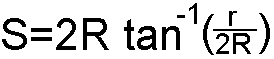
"This is difficult to illustrate, but suffice it to say that there are two concepts of the "shape" of outer space. One is that it is straight-line (Euclidean), and the other is that it is curved (Riemannian). Based on observations of 27 binary star systems, it appears that light in deep space travels in curved paths on Riemannian surfaces. 2

The formula for converting straight-line to curved space is:

where r is the Euclidean or straight-line distance, and R is the radius of curvature of Riemannian space. Using this formula, and a radius of curvature of 5 light-years for Riemannian space, the time for light to reach us from points in our own solar system is practically the same for either Euclidean or Riemannian distances, and there is not much of a change even out to the nearest star (4 1/2 light-years). But if we insert an infinite Euclidean distance for the farthest conceivable star, it would take only 15.71 years for light to reach us from that distance!"
source

These are 3 fundamentally different categories of explanations for how distant light could get to earth within a short time-frame (as measured on earth). 


~ Rak Chazak

Sunday, March 30, 2014

Phreniology: Theory of the Mind-Brain Interaction

I've had an idea that the body is a machine, the brain is the computer that controls it and runs subprograms, and the mind is the "user" component that "operates" the brain-body system to get the living human being to perform the actions desired by the operator. As an allegory for how our bodies, corporeal and incorporeal, actually work together. I was interested when I picked up a magazine from the leisure-reading rack at the YMCA and read this:

Credit for the information: National Geographic Magazine, February 2014 edition.
"Caltech and UCLA scientists use pictures of celebrities to study how the brain processes what the eyes see. In 2005 they found an individual nerve cell that fired only when subjects were shown pictures of Jennifer Aniston. Another neuron responded only to pictures of Halle Berry—even when she was masked as Catwoman. Follow-up studies suggest that relatively few neurons are involved in representing any given person, place, or concept, making the brain staggeringly efficient at storing information."
I fired off a text to my college friends telling them what I thought:
This is interesting, and seems to confirm my phreniology theory (+10pts for using big words!) that the brain is not the thing that stores memories--the mind(the spirit/soul) is--it is merely the biological machine that allows our complete human form to have access to our spiritual-identity-associated-memories for the purpose of conscious, mind-and-brain thought processing of these memories. How's that sound?
If the brain itself doesn't store memories, then the one-neuron recognition finding would be consistent with this: the memories associated with identifying and recognizing Jennifer Aniston as a singular individual need only be accessed by a single neuron "tagged" as the gateway for the brain to interact with the mind's memories. The rest of the brain's activity, beyond this one neuron, makes up the biological "processing" of this connection, that allows you to consciously realize that you're looking at Jennifer Aniston.
Side thought: In other words, every individual you can recognize is represented by one neuron. So, it seems likely, is any given place, any given major event in your past experience, and any given major concept that you understand or believe in. They are like locked gates that your brain holds the key to; it opens each gate when prompted, and proceeds to open up related thoughts through that particular memory-jogging avenue. (Your mind-brain therefore has an almost infinite capacity for remembering things, since you have hundred billions of neurons. It would seem necessary, if we're going to live forever, and remember a near infinite amount of things, wouldn't it?) Have you ever found that, for example when remembering song lyrics, you can only remember some things if you first "go through" the associated stored memories that come before it, in a sequence? I've heard the old poets of old held a remarkable amount of history in oral tradition, and perhaps this is how.
This makes further sense when it comes to mentally impaired or brain-damaged individuals. Their brain-mind connection is hampered because the brain is damaged. The brain therefore can't interact with the mind properly, and conscious thought is hamstrung and takes place less efficiently. Even more interestingly, this can explain why seemingly smart people can make such mind-numbingly (points for relevant adjective!) idiotic decisions and go from reasonable starting points to impossibly bizarre and false conclusions. In this case, their brain isn't damaged, but their mind is. The Bible says that those who rebel against God and do not have the Holy Spirit in them have a 'natural mind' and a 'seared conscience.' (1 Timothy 4:2, 1 Corinthians 2:14) My understanding of this is that unbelief literally makes you unintelligent, and perhaps that's because the mind fails to interact with the brain properly--it's the reverse of the previously discussed circumstance, except in this case it's your fault for it. Romans 1:21-22 further buttresses this notion, that prolonged and obstinate refusal to repent before God will literally make people stupid. The smart choice, in more than one way, it would seem, is to submit in faith to Christ.

If my phreniology theory is right, then an interesting conclusion results: you don't actually lose your memories. You may forget them, but you've merely lost access to them. You'll be able to access them once more in the eternal state, when your whole human form--mind and body--is repaired to full capacity. Unless, that is, you never submit your carnal mind to Christ.

~ Rak Chazak

Further reading:
http://www.gotquestions.org/seared-conscience.html
http://biblehub.com/1_corinthians/2-14.htm

Thursday, October 17, 2013

Stay Away From My Penis! What the Government Has Against Uncut Guys (Pics)

                This is shamelessly titled to hopefully show up in search queries by people looking for internet pornography. And yes, there are pictures. Here’s one:

                This is an image I created in Photoshop myself so as to avoid potential copyright issues, which I’ll use to identify posts which will discuss sensitive or personal subject matter. It will alert people who may be discouraged from reading something that they think is “TMI” (too much information) or that would make them feel awkward or uncomfortable. For extremely intensive (one could say ‘descriptively explicit’) blog posts, I’ll utilize a different image, one with an exclamation point instead of a period. 
                Today’s discussion will require the latter identifier. From the title, you may have guessed that ‘uncut’ refers to someone who has not been circumcised. Circumcision is the process of cutting off the foreskin of a penis. For those who may not know what a foreskin is, imagine the texture of your cheek, inside and out, but with the thickness of the thin edge of your ear. It covers the whole glans penis (the purple/red part) but can be pulled back to completely uncover it, where it then can sit rolled up against the back edge of the head of the penis, quite similar to how a rolled-up pantleg or shirt sleeve is prevented from unfurling past the knee or elbow. The immediate benefit of a foreskin is that it protects the tip of the penis like a sheath protects a knife’s blade, or a cap protects lipstick. Both by reducing sensitivity and to a lesser extent by keeping dirt out. This is great for a guy who doesn’t want to use a restroom and have something splash back up and hit the vulnerable parts. That would be like getting something nasty on your eye, rather than on your eyelid, wherefrom you can then wash it off, since it just hit the skin.

                Now that the stage is set, with the reader understanding why the presence of a foreskin is more sanitary than the lack of one, it’s time to get to the point. Apparently some educated idiot has gotten the bright idea to claim, in alarmist tones, that having a foreskin makes you more at risk of STDs. The solution, they promise, is to promote circumcision among males, particularly in Africa (because of the HIV epidemic there).

                But wait. How does the presence of a foreskin make one more at risk of STD transmission than a ‘snipped’ guy? Doing a little digging reveals that the science behind the claim is thus: the foreskin has a lot of blood vessels, and since it has very thin and tender skin on the inside, small tears from sexual activity would allow infectious agents to enter the bloodstream and make the person sick. But wait. Where would these infections be coming from? An infected person. And how are they transmitted? Through sexual activity. So what is really going on here?

                A foreskin is only going to “put” a person at higher risk of contracting a disease if the uncut guy is having sex with someone who has a sexually transmitted disease! If you’re not having sex with STD-positive people—for example, if you’re not having sex with anyone at all—then no problem! It’s the wanton sexual activity that’s the risky behavior, having a foreskin isn’t what makes it risky. Snipping yourself is a non-solution that doesn’t make you immune, just reduces the chance that you’ll get what’s coming to you for doing the wrong thing. In that way, it’s just like a condom. It doesn’t make your unsafe behavior suddenly become “safe sex.” It just slaps a 98% chance rating on what was previously a 50/50 or 100% guarantee that you would become a victim of the consequences to your own bad choices. There is absolutely no need to get snipped if you aren’t, just like there’s absolutely no need to ever use a condom, if you’re doing it right. If you’ve gotten married to someone, after years of knowing them, and being totally confident that their sexual history is either nonexistent or at least hasn’t left them with a disease, then there is no necessity to adopt “risk-reducing” behaviors, because you aren’t “at risk” in the first place. Wouldn’t it be nice to not have to be afraid of that? That’s just one of the many wonderful benefits to submitting to God’s rules for human behavior. Sexual purity and monogamy. Risk-free sex with no strings attached.


PS So what did the government have to do with this? They’re promoting short-term fixes to a problem that requires a spiritual and not a medical solution. This government would NEVER recommend Biblical morality, that is to say, abstinence from promiscuous sexual behavior, as a way to avoid the spread of STDs. Instead they would recommend “safe sex,” which is code for minimizing, but not removing, the inherent risks that are part and parcel of sexual promiscuity. The only 100% guaranteed way to avoid sexually transmitted diseases is to not engage in sexual activity outside of a marriage that fits the Biblical model. This isn’t popular or politically correct. But people have always hated the truth when it gets between them and their personal gratification. This is nothing new. What would be new would be if people started rebelling against the norm and chose to refrain from the things that they weren’t expected to refrain from. Imagine the attention that such a divergence would garner. 

~ Rak Chazak

Proof I'm not making stuff up, with regard to the government-promoted circumcision program:
http://open.salon.com/blog/judy_mandelbaum/2012/07/27/africas_male_circumcision_crusade_boon_or_boondoggle -- hah, this site even criticizes the methodology of the tests that led them to conclude that circumcision reduces risk!
I kinda wanna leave it there. But here's the rest of the results of the google search:

See, I gave you links favoring circumcision and links critical. That's what it means to be unbiased. Not that you have an objective view, but that you considered all views without prejudice, before making your own decision.