Showing posts with label symbolism. Show all posts

Tuesday, August 11, 2015

Who Orbits Whom?

This is an excerpt from Female Piety, which a friend texted me.

"This then is woman's true position, and if anything more need be said to prove it from the records of Christianity, we may refer to apostolic language in other places, where wives are enjoined to be subject to their husbands in all things, even as the church is subject to Christ. Nor is the apostle Paul alone in this, for Peter writes in the same strain. Let woman then bow to this authority, nor feel herself degraded by such submission. It has been said, that in domestic life, man shines as the sun, but woman as the moon, with a splendor borrowed from the man. May it not be said with greater truth and propriety, and less invidiously, that man shines as the primary planet, reflecting the glory of God, who is the centre of the moral universe; and woman while she equally derives her splendor from the central luminary and is governed by his attraction, yet is the satellite of man, revolves around him, follows him in his course, and ministers to him."

~ Rak Chazak

Friday, March 6, 2015

A God of Symbolism and Metaphor

In much of common usage, symbolism and metaphor are synonymous terms. There is a slight difference, in that symbolism refers to objects or concepts representing other objects or concepts, whereas a metaphor can refer to a word or phrase that stands in the place of another. In this way, there is overlap, since metaphor can be symbolic, as in the case of Animal Farm by George Orwell. Old Major is a symbolic representation of Karl Marx in the context of the story, and so every time you see the words "Old Major," that's understood to be a metaphor for "Karl Marx," and so you mentally substitute the words. So you could say that symbols are objects whose comprehension generates abstractions, and metaphors are abstractions which apply themselves to objects.
  • But the greatest thing by far is to have a command of metaphor. This alone cannot be imparted by another; it is the mark of genius, for to make good metaphors implies an eye for resemblances.
    • 1459.a4
~ Aristotle, Poetics.
"19 because what may be known of God is manifest in them, for God has shown it to them. 20 For since the creation of the world His invisible attributes are clearly seen, being understood by the things that are made..." ~ Romans 1
Aristotle recognized a divine truth.

As a matter of interest, note that "genius" is related to "generate," "generation," and "genesis." It was coined in distant ages to mean native talent, that is to say, "he was born with it." So genius is technically not learned knowledge but innate wisdom. It means you get something by virtue of being instinctively attuned to perceive it, and that you didn't have to be taught by someone else in order to make the connection.

Now, I believe 'nature and nurture' both are relevant in forming a person's thinking, but the emphasis on genius is that it has more to do with the wiring of their brain -- or the operation of the spirit aspect of the mind-brain interface -- than it does with what you learn. Accumulated knowledge is merely the way that you can identify wisdom, like glitter on a paper with glue makes a pattern. The way the glitter--here a metaphor for knowledge--sticks to the page reveals whether the intellect in question is genius or not.


Nevertheless, I agree with Aristotle that "command of metaphor" is a mark of a fine-tuned intellect. To be good at using and recognizing abstract relationships between notions, such as symbolism, analogies, metaphors, themes, etc, is to show the mark of a gifted mind. Gifted by whom? God, the giver of all gifts.

I love the fact that by reading the Bible, it's plain to see that God enjoys the use of symbolism. Every parable -- symbolic. Every eschatological prophecy -- heavy on symbolism. Every ceremonial law in the Old Testament paradigm -- symbolism (Matthew Henry's commentary was very helpful to me in this regard, because I had not realized before I studied the various purification guidelines (after an atheist insinuating it proved scientifically illiterate men wrote the Bible) how each aspect was symbolic -- everything points to the Cross). Every institution God created is symbolic: pastors, husbands, and lay believers-at-large are all representatives of Christ in some capacity. Marriage is a symbol of God's love for the Church while, in a lesser degree (because this is not emphasized in the Scripture as much) also symbolic of the Father and Son in the Holy Trinity, operating in a coequal loving relationship where one submits to the other and is no less God Almighty because of it!

I love discovering some new symbolism in the Bible. Mark my words, symbolism is not allegory. Something can be very real while at the same time being a symbol of something else. The statue of George Washington in Grand Central Station (?) for example. The fact that the statue isn't a real person doesn't mean that George Washington didn't exist. But ALLEGORY would say that the face on the $1 bill is not a real person, but an abstraction, a construct to serve as a national creation-myth, an explanation for why America is the way it is. So you can see the difference, I hope. I don't go looking for ways to allegorize Bible passages into something else, denying that it means what it says. I take the plain reading of the text -- and merely mean to say that I love digging into it to find the deeper meanings beyond the plain fact of the historical truths that are relayed to us.

The quest to identify symbolism is synonymous with the quest to answer the question "Why do we do this?" It is the answer to confusion about tradition. It is the merging of the modern practice of a thing with the understanding of the reason behind the initial institution of the practice.

Such knowledge is eminently helpful to Christians, to prevent them from a) having their faith shaken by people who challenge why seemingly absurd things are done or believed by Christians, and b) from concluding loopy, wonky theology because they don't understand the reasons why the Bible says something.

So to borrow from Aristotle's language, I exhort you to take command of metaphor!


~ Rak Chazak

Saturday, July 26, 2014

Alternative to Celebrating Birthdays

I had a short text epiphany I shared with a few of my friends yesterday. Not quite a 'treatise'; this'll be short:

"I was thinking about how people use their kids' birthdays as passwords and how that really isn't such a great idea for internet stuff, and as I pondered how to get around that, I relighted on my opinion that birthdays are not really that significant anyway (here and here): so I came to the interesting idea, rather than celebrating my children's birthdays, my wife and I would instead calculate our best guess as to the day of fertilization, and celebrate that week instead. I'm thinking of the symbolic significance of this, that it would attest to the fact that life begins at conception and only becomes revealed, if you will, upon birth. It's an excellent illustration of the relationship between justification and glorification in the New Birth: when we are saved, at first nothing noticeably significant happens. But inside us, enormous changes are occurring; and only at long last when we die or are caught up, will the dramatic revelation take place: others will now see what has already been ordained from the deep past. How we celebrate will teach our kids about the reality of salvation and how to be heavenly minded.


~ Rak Chazak

Thursday, June 12, 2014

About that Scarlet Thread.

I flipped on the radio as I drove up to the YMCA parking lot yesterday, and someone on one of the Christian-radio stations I get in my area was reading from Genesis, specifically the scene where Joseph ultimately reveals himself to his brothers. But first, he tests them.

For those who don't know, Joseph was sold into slavery by his brothers, out of envious anger because he was their father's favorite son. They then deceived Jacob, their father, into believing that Joseph was dead. Benjamin was Joseph's brother by the same mother (the 12 tribes of Israel being born from 4 different women), and the youngest and most cherished of Jacob's children after the loss of Joseph. Joseph, now a governor in Egypt, hid a silver chalice in Benjamin's rucksack and then pretended that Benjamin had stolen it, in order to demand that Benjamin would remain behind as the other brothers returned to Jacob.

It was a clever plan. It would ensure that Jacob would come to Egypt, so that Joseph could be reunited with his father. And even if not, he now had his only immediate brother with him, either way.

Then this happened:
Judah Intercedes for Benjamin18 Then Judah came near to him and said: “O my lord, please let your servant speak a word in my lord’s hearing, and do not let your anger burn against your servant; for you are even like Pharaoh. 19 My lord asked his servants, saying, ‘Have you a father or a brother?’ 20 And we said to my lord, ‘We have a father, an old man, and a child of his old age,who is young; his brother is dead, and he alone is left of his mother’s children, and his father loves him.’ 21 Then you said to your servants, ‘Bring him down to me, that I may set my eyes on him.’ 22 And we said to my lord, ‘The lad cannot leave his father, for if he should leave his father, his father would die.’ 23 But you said to your servants, ‘Unless your youngest brother comes down with you, you shall see my face no more.’24 “So it was, when we went up to your servant my father, that we told him the words of my lord. 25 And our father said, ‘Go back and buy us a little food.’ 26 But we said, ‘We cannot go down; if our youngest brother is with us, then we will go down; for we may not see the man’s face unless our youngest brother is with us.’ 27 Then your servant my father said to us, ‘You know that my wife bore me two sons; 28 and the one went out from me, and I said, “Surely he is torn to pieces”; and I have not seen him since. 29 But if you take this one also from me, and calamity befalls him, you shall bring down my gray hair with sorrow to the grave.’30 “Now therefore, when I come to your servant my father, and the lad is not with us, since his life is bound up in the lad’s life, 31 it will happen, when he sees that the lad is not with us, that he will die. So your servants will bring down the gray hair of your servant our father with sorrow to the grave. 32 For your servant became surety for the lad to my father, saying, ‘If I do not bring him back to you, then I shall bear the blame before my father forever.’ 33 Now therefore, please let your servant remain instead of the lad as a slave to my lord, and let the lad go up with his brothers. 34 For how shall I go up to my father if the lad is not with me, lest perhaps I see the evil that would come upon my father?”
I highlighted verse 33 for a very particular reason.

http://thegospelcoalition.org/blogs/trevinwax/2014/02/25/free-ebook-the-scarlet-thread-through-the-bible/
As the above link reveals, the "Scarlet Thread" is a reference first used in a mid-20th-century sermon, and it refers to the existence of a "Story within the stories" of the Old Testament--that the story of Redemption, the Gospel of Jesus Christ, is interwoven and echoed or paralleled in the vast majority if not every major Old Testament account. I had heard of this before and accepted the concept, but I hadn't realized its relevance to Judah the patriarch of the tribe of Israel by the same name.

"Now therefore, please let [Me] remain instead of [the one who you have determined is guilty] as a slave to my lord, and let the lad [be free to] go up with his brothers." What is this but the essence of substitutionary atonement and the kinsman-redeemer concept? Judah is revealing to Joseph--unknowingly, since he's unaware that Joseph is his long-lost brother--a drastic internal change, from a man who put himself first at the expense of his brother and his father's joy, to a man who puts his brother and father first, and willingly offers himself to take the punishment he doesn't deserve. Judah has become an illustration of Jesus Christ** in this passage.

Monday, June 2, 2014

The Gods of the Copybook Headings

I found this absolute gem a year or so ago. It appears to be an excellent metaphor for the cyclical nature of cultural rise and decline. Indeed, the peculiar first person singular and plural in the poem (“I” and “We”) seem best to identify the speaker as symbolic of Society. This is borne out by the second line in the second to last stanza.

As for the identification of the Gods of the Market and the Gods of the Copybook Headings, both are best understood when the word “Gods” is thus defined:
  • gods are mighty beings who create, sustain order, and rule over things (governing destiny and imposing laws). In this regard, they can be people, divine spiritual beings, or simply symbolic references to the forces that lie behind, in a causative manner, some phenomenon.
  • following that, the Gods of the Market appear to be both the micro and macro level mechanics of the economy, and prominent economists, academics and politicians. Take note that the market need not be as narrowly defined as merely monetary exchange, but the exchange of ideas and on the broadest level, the interactions of people in large groups with each other. So I take the Gods of the Market to be, on a level, the voice of a portion of mankind, those  having lofty ideas about how to order society—as the poem shows their respective failure to do.
  • the Gods of the Copybook Headings, then, are to be identified as both the laws of nature that ensure that the proverbial “common wisdom” is always proven true by history, and the outspoken ‘wise men’ who propound these truths and stand against the tide of public opinion and endeavor to teach the wisdom of history to Society.

What is a copybook heading? Remember that Kipling wrote around the turn of the 20th century. Copybooks were notebooks used in British schools, where sentences were copied by students over and over, both to drill in the knowledge of what they were writing, and to practice their script. On each page at the top or bottom, there would typically be short proverbs printed. I don’t recall if I read that these were what was copied, or if they were just included as a publisher’s design. If they were what was copied, the symbolism gets even stronger, because there is the added implication that Society has had common sense drilled into its head, again and again, only to ignore it in favor of the promises of the Gods of the Market, until finally the adage, “those who do not learn from history are condemned to repeat it” comes true. Copybook headings imbued wisdom in pithy, easily remembered ways. With that in mind, enjoy one of the most poignant poems I’ve ever read:

Thursday, May 22, 2014

Owl City Allegory: Interpretation of Meteor Shower

My take: a blatant praise song sung publicly on stage during Adam's Ocean Eyes tour.

Adam recently posted the following on his Tumblr blog:
I see that the lord is always with me. I will not be shaken, for he is right beside me. No wonder my heart is glad, and my tongue shouts his praises! My body rests in hope. For you will not leave my soul among the dead or allow your Holy One to rot in the grave. You have shown me the way of life, and you will fill me with the joy of your presence. (Acts 2:25-28)

I recognized a similarity between this passage and two lines in one of his shortest (lyrically speaking) songs.

I can finally see
that you're right there beside me.
I am not my own
for I have been made new.
Please don't let me go.
I desperately need you.

These are the only lines to the song, with the last 4 being repeated once. The song is titled Meteor Shower. 
 
There isn't much in the way of imagery in this song, so a line by line interpretation wouldn't be very effective. I think the song as a whole seems to be, pretty clearly, a unidirectional conversation between the singer and God. What sold it to me, though, was seeing him point up at the sky, emphatically, as he sang it when I saw him in concert. [Here's an example in a video upload--right at the very end] Body language spoke louder than words at that moment.

Quickly:
  • Why can he finally see? Because he wasn't certain he could before. Doubt or myopia prevented him from seeing the obvious. A possible reference to Adam's dead-end jobs prior to his discographic success.
  • The 'right there beside me' seems to be a reference to the verses I posted above, whether they influenced the song or not.
  • That he is not his own echoes 1 Corinthians 6: 19-20.
  • That he has been made new echoes 2 Corinthians 5:17
  • The final two lines seem more of a sincere emotional plea, rather than a theological statement. God won't let anyone go who belongs to Him (John 6:37), so it would be better to take "please don't let me go" as not referring to salvation in particular. It's a recognition of Adam's dependence on God for every thing. Hardly "me-focused," and better than the average CCM song just by virtue of that alone.
 
Agree with the analysis?

~ Rak Chazak

Tuesday, April 22, 2014

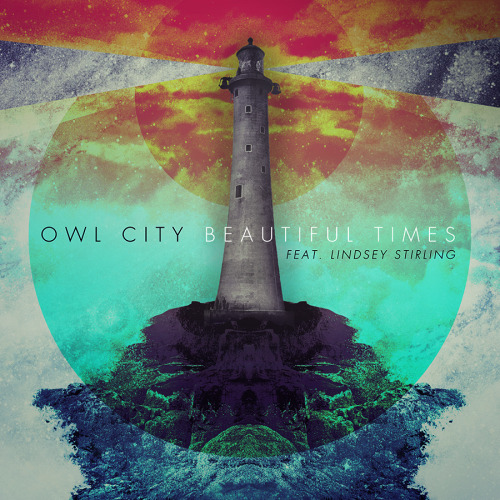
Owl City Allegory: Interpretation of Beautiful Times

My Take: A reflection on struggling with sin and the loss of assurance that comes right in the midst of, or after, stumbling.

First, here is how Adam introduced his new single on beautifultimes.owlcitymusic.com.

Hi friends,
I am flying home to Minnesota and wanted to write to you. This summer is the five year anniversary of Ocean Eyes and I can't believe how fast time flies. Back home I sometimes drive past the UPS place, the Coke warehouse or the old construction sites I worked at prior to OC and I'm reminded how good I've got it. Six years ago I was bored and uninspired and now every time I drive by the old prisons I never thought I'd escape from, I feel that much more fortunate to get to do what I love. For that, I thank you for your support, and more than anything, I praise God with all I have.
Over the last half year I've been plotting my next moves and deciding how and when I want to imagine the next chapter of Owl City. I've decided to do something I've never done before and release a handful of standalone EPs throughout 2014. I've never released consecutive EPs à la snapshots in a photo album or short stories in a book or a series of paintings in a collection, but I'm excited to release a slow-and-steady stream of music this year.
Thus, it is with tremendous pleasure that I present to you a new Owl City song entitled, "Beautiful Times". Deeply subjective and personal, it has a dark beauty I find compelling and the essence of the track offers the idea that life is wonderful despite the burdens and afflictions that seek us out. It is an anthem for those who search for strength to rise above hardship. I was honored to work with yet another of my favorite artists, Lindsey Stirling, who was kind enough to grant me the honor of featuring her. I hope you enjoy this song as much as I enjoyed creating it.
Finally, I wish to thank you for being so patient as I finish the upcoming chapter in my story. I appreciate your loyalty more than I know how to say.
-Adam
A verse for consideration. I think this may summarize the song pretty well.


 "Weeping may tarry for the night, but joy comes with the morning."

Psalm 30:5


This is the post on Adam Young's tumblr that gave me the go-ahead, or green light, to proceed with a theological interpretation of the song:
“In Him was life, and that life was the light of all mankind.The light shines in the darkness, and the darkness has not overcome it.”
-Gospel of John 1:4-5
Basically this what I think the light that Adam Young was referring to in his song Beautiful Times. 

Adam "reblogged" that, which is the tumblr version of a facebook 'like' or a twitter 'retweet.' It represents your agreement with what was said.


Line By Line
Interpretation:

Monday, April 21, 2014

New to Diary of a Single Christian Guy: Post Series

                Today I'd like to introduce you to my very first one, “Owl City Allegory,” and note that while I’ve had themed posts turn up in sequence over time, I have yet to organize them together in a concerted “blog series.” This first one will draw on similar analytical methods as used in Poignant Music, for example, and that article may be interesting to readers who were unaware of it, buried as it is in the middle of a sequential, but unorganized logjam of 150+ posts.

Part I: Lyric Interpretation of Owl City Songs

                As we begin, I want to explain that these are going to be intentionally pigeon-holed at times, after enough lyrical evidence has convinced me of the possibility of an allegorical interpretation, in order to suggest a way for the whole song to cohere together into one thematic message. These are my own interpretation, and I don’t insist that each conclusion must be what Adam Young (the writer, singer and producer behind Owl City) had in mind when writing, but the point will be that, intentionally or unintentionally, he has crafted the lyrics so that they can indeed be validly interpreted as a subtle theological message, without going to interpretive extremes. I believe my analysis will be fair, and I will point out shortcomings where I consider them to be. It must also be noted that Owl City music, especially the early variety, is characterized by whimsicality, and in many cases they are impossible for a bystander to interpret in the sense that they can be at all sure what Adam was thinking when he inserted those lines. However, Adam is a sincere Christian and based on his public expressions of faith on his blog and elsewhere, I don’t believe he would object to people’s attempts to find hidden spiritual meaning in the texts of his songs, so long as the conclusions didn’t amount to doctrinal confusion, of course. And with that preface, this endeavor of mine is primed to begin. 

Side note:

One of the benefits of Adam’s meticulously preserved formlessness (he has said so comparably little about his personal life and views that one article about him online even called him “completely non-political”) is that his fans have the opportunity to see themselves in him, even though they are very different in terms of life experience. There have even been some who claim he's gay--not as an insult to his music, but in a desire to more deeply connect with him in a shared identity. As it turns out, melancholy musings on inexpressible yearnings by an eccentric mind is something many share. We’re all a little bit odd, and the oddities in Adam’s lyrics, combined with their optimism and hope, have in my view given a lot of young people something to connect to and lift them up. They have, in Adam’s music, an alternative to contemporary offers of sympathy for their weirdness and desire to know they’re not alone. Consider Lady Gaga’s fans, affectionately (?) called “Little Monsters” by the artist. There is also a community of the strange and the burdened in her fan base, but I have yet to hear of someone vomiting on Adam during a concert. There is a huge difference in how the base is encouraged: Owl City doesn’t shy from quirkiness but it never encourages listeners to fester in despondency and feed their discouragement. So much of pop culture encourages “acting out” as a way to deal with personal struggles. Adam never has. I’m incredibly grateful to Adam simply for what I know he’s done to the young adult culture. He’s shown that if you’re sad, you don’t have to express it through attention-seeking delinquency or self-abasement. It’s okay to be sad, lonely, afraid and a little bit different from “everybody else.” These are normal things, but they don’t mean that your life is over. Instead, his songs offer a thoughtfully different approach.

It’s almost too easy for me to draw similarities between me and Adam. We’re both tall, though he’s taller. We’re both chronically uninvolved in long-term relationships, though we’ve both had romantic experiences in the past, and clearly think about love a lot. Which may be due to the age factor. He’s roughly 3 years older, so a lot of the things we’re dealing with in life are bound to be similar. We're both introverts and spend a lot of time alone just thinking or working on various projects. Hopeful optimists, but cynical realists. Adam deals frankly with issues like shame, death, depression etc and ‘calls it like it is,’ but he doesn’t wallow in grief, he looks up and always has a positive angle to the calamity around him. Or is it me? I am so passionately a fan of what I call “cynical optimism” (for an example, read the whole book of Ecclesiastes in a straight shot). You can’t ignore the flawed and terrible things in the world, but you can’t submit to the idea that those things will have the last word. In Adam’s lyrics, I see the innocence and childlike glee that I know at times, in my clearer thinking moments. The public face of Adam, and his song persona, is like the very best of me—if I also could sing. In the vein of “meditating on what is good and excellent and pure (Philippians 4:8),” listening to his songs can elevate my mind to dwell more naturally on positive things over negative, and in a very direct yet subtle way, make me a better person. I enjoy the occasional metal-rock song, but I can’t listen to that stuff all the time. Part of the reason is that they nearly never contain any hope. But Adam’s songs contain hope. And there’s a very simple and subliminal reason for that. It’s what I intend to show in this blog series. So let’s get started. :)

~ Rak Chazak

Tuesday, February 11, 2014

General Disinterest in Valentine's Day

A lot of criticism about this holiday can be generated and focus on a long list of different aspects. But I'm going to stick to my theme of criticism for the "Christmas" holiday and others like it, where the expectation is that people ought to give gifts to each other, and where the gifts are always implicitly material in nature, and criticize the very underlying premise of Valentine's Day.

http://singlechristian1.blogspot.com/2013/12/symbolism-in-christmas.html


"Giving items to one another is a thing that can be done year round, and is more joyous when done spontaneously, not as a requirement. When a special occasion comes around that offers reflection on the past and the future, I think memories are the important thing to create."


Here's the problem with the expectation of getting a gift. If you don't do something, it causes resentment. This is wrong. It's not what generosity and gifts is about! A person getting a gift is grateful and pleased with the giver. But if they're expecting to be given something, then the gift is no longer a gift, it's a payment--a debt owed to the person getting the "gift." This is why a person would get angry if they don't get a gift--they're experiencing the same emotion as they would if the giver was in their debt, and defaulted on their loan--if they made a late payment.

This is not what holidays should be about, or foster!

This is why I am so strongly against the idea that a specific day of the year should be set aside to give gifts to your family, or to be especially romantic with your significant other. Do we not love them on all the days of the year? Can we not be romantic all the time; is it really so much effort to be a generous lover? On some level, this concept applies to birthdays also. I'm a much bigger fan of using special dates as opportunities for reflection, or of making memories by doing something together (which can still be a sort of gift, I realize--there's nothing wrong with that), and of giving gifts spontaneously throughout the year, catching your loved ones by surprise and making them grateful, instead of resentful that you didn't give them what they expected, when they were expecting it.

A person who gets material objects of desire on certain days each year develops an expectant desire for them, and experiences bitterness when they don't get them. But if on your children's birthdays each year, you take them on an exciting adventure to a park or nature preserve they haven't been before, to explore God's creation and spend time together, even if this counts as a gift, think, what will they look forward to on those special days in years to come? Spending time with family and grasping the bigger picture of what makes another year of life so special: the fact that we are stewards of God's creation and He has blessed us with the double gifts of getting to enjoy His world, as well as being saved through His mercy via the Cross, for the enjoyment of a more perfect world for eternity to come. It makes a huge difference!

I refuse to participate in Valentine's Day. This is an easy thing to say for a guy who's never had occasion to spend money on a sweetheart, but having the time to think about it has led me to realize that it's not such an auspicious time of year after all. Romance is something you create on your own, and if you need help, you may be in trouble. And those who depend on cultural expectations to get things they desire may have their priorities wrong--desiring the 'gifts' more than the gift-giver. When you think about it, V Day and how you approach it is a perfect parallel to how you approach God and the Gospel. Do you desire Him, or do you just want a sugar daddy God who will give you things? It's very closely connected, on a spiritual level.

I therefore choose to not participate in expected gift exchanges or purchases of teddy bears, chocolate or flowers on Valentine's Day, because of what it symbolically demonstrates about the Gospel.

This is a preferential decision I've made, based on dogma I hold to. I wouldn't dogmatically require others to follow along with my preference. I plan to talk about this in an upcoming post.

After reading this, are you more or less inclined to participate in the cultural expectations surrounding February 14th?

~ Rak Chazak