Showing posts with label music. Show all posts

Thursday, May 22, 2014

Owl City Allegory: Interpretation of Meteor Shower

My take: a blatant praise song sung publicly on stage during Adam's Ocean Eyes tour.

Adam recently posted the following on his Tumblr blog:
I see that the lord is always with me. I will not be shaken, for he is right beside me. No wonder my heart is glad, and my tongue shouts his praises! My body rests in hope. For you will not leave my soul among the dead or allow your Holy One to rot in the grave. You have shown me the way of life, and you will fill me with the joy of your presence. (Acts 2:25-28)

I recognized a similarity between this passage and two lines in one of his shortest (lyrically speaking) songs.

I can finally see
that you're right there beside me.
I am not my own
for I have been made new.
Please don't let me go.
I desperately need you.

These are the only lines to the song, with the last 4 being repeated once. The song is titled Meteor Shower. 
 
There isn't much in the way of imagery in this song, so a line by line interpretation wouldn't be very effective. I think the song as a whole seems to be, pretty clearly, a unidirectional conversation between the singer and God. What sold it to me, though, was seeing him point up at the sky, emphatically, as he sang it when I saw him in concert. [Here's an example in a video upload--right at the very end] Body language spoke louder than words at that moment.

Quickly:
  • Why can he finally see? Because he wasn't certain he could before. Doubt or myopia prevented him from seeing the obvious. A possible reference to Adam's dead-end jobs prior to his discographic success.
  • The 'right there beside me' seems to be a reference to the verses I posted above, whether they influenced the song or not.
  • That he is not his own echoes 1 Corinthians 6: 19-20.
  • That he has been made new echoes 2 Corinthians 5:17
  • The final two lines seem more of a sincere emotional plea, rather than a theological statement. God won't let anyone go who belongs to Him (John 6:37), so it would be better to take "please don't let me go" as not referring to salvation in particular. It's a recognition of Adam's dependence on God for every thing. Hardly "me-focused," and better than the average CCM song just by virtue of that alone.
 
Agree with the analysis?

~ Rak Chazak

Tuesday, April 22, 2014

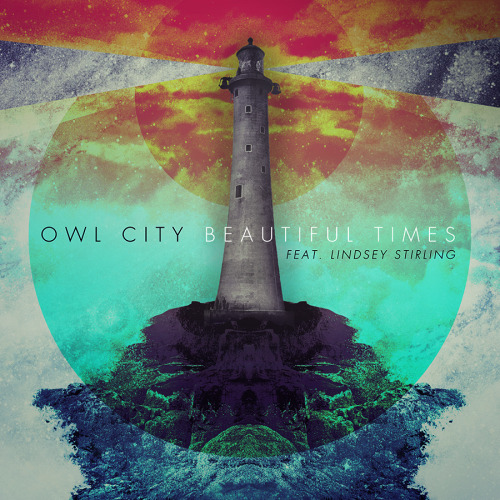
Owl City Allegory: Interpretation of Beautiful Times

My Take: A reflection on struggling with sin and the loss of assurance that comes right in the midst of, or after, stumbling.

First, here is how Adam introduced his new single on beautifultimes.owlcitymusic.com.

Hi friends,
I am flying home to Minnesota and wanted to write to you. This summer is the five year anniversary of Ocean Eyes and I can't believe how fast time flies. Back home I sometimes drive past the UPS place, the Coke warehouse or the old construction sites I worked at prior to OC and I'm reminded how good I've got it. Six years ago I was bored and uninspired and now every time I drive by the old prisons I never thought I'd escape from, I feel that much more fortunate to get to do what I love. For that, I thank you for your support, and more than anything, I praise God with all I have.
Over the last half year I've been plotting my next moves and deciding how and when I want to imagine the next chapter of Owl City. I've decided to do something I've never done before and release a handful of standalone EPs throughout 2014. I've never released consecutive EPs à la snapshots in a photo album or short stories in a book or a series of paintings in a collection, but I'm excited to release a slow-and-steady stream of music this year.
Thus, it is with tremendous pleasure that I present to you a new Owl City song entitled, "Beautiful Times". Deeply subjective and personal, it has a dark beauty I find compelling and the essence of the track offers the idea that life is wonderful despite the burdens and afflictions that seek us out. It is an anthem for those who search for strength to rise above hardship. I was honored to work with yet another of my favorite artists, Lindsey Stirling, who was kind enough to grant me the honor of featuring her. I hope you enjoy this song as much as I enjoyed creating it.
Finally, I wish to thank you for being so patient as I finish the upcoming chapter in my story. I appreciate your loyalty more than I know how to say.
-Adam
A verse for consideration. I think this may summarize the song pretty well.


 "Weeping may tarry for the night, but joy comes with the morning."

Psalm 30:5


This is the post on Adam Young's tumblr that gave me the go-ahead, or green light, to proceed with a theological interpretation of the song:
“In Him was life, and that life was the light of all mankind.The light shines in the darkness, and the darkness has not overcome it.”
-Gospel of John 1:4-5
Basically this what I think the light that Adam Young was referring to in his song Beautiful Times. 

Adam "reblogged" that, which is the tumblr version of a facebook 'like' or a twitter 'retweet.' It represents your agreement with what was said.


Line By Line
Interpretation:

Monday, April 21, 2014

New to Diary of a Single Christian Guy: Post Series

                Today I'd like to introduce you to my very first one, “Owl City Allegory,” and note that while I’ve had themed posts turn up in sequence over time, I have yet to organize them together in a concerted “blog series.” This first one will draw on similar analytical methods as used in Poignant Music, for example, and that article may be interesting to readers who were unaware of it, buried as it is in the middle of a sequential, but unorganized logjam of 150+ posts.

Part I: Lyric Interpretation of Owl City Songs

                As we begin, I want to explain that these are going to be intentionally pigeon-holed at times, after enough lyrical evidence has convinced me of the possibility of an allegorical interpretation, in order to suggest a way for the whole song to cohere together into one thematic message. These are my own interpretation, and I don’t insist that each conclusion must be what Adam Young (the writer, singer and producer behind Owl City) had in mind when writing, but the point will be that, intentionally or unintentionally, he has crafted the lyrics so that they can indeed be validly interpreted as a subtle theological message, without going to interpretive extremes. I believe my analysis will be fair, and I will point out shortcomings where I consider them to be. It must also be noted that Owl City music, especially the early variety, is characterized by whimsicality, and in many cases they are impossible for a bystander to interpret in the sense that they can be at all sure what Adam was thinking when he inserted those lines. However, Adam is a sincere Christian and based on his public expressions of faith on his blog and elsewhere, I don’t believe he would object to people’s attempts to find hidden spiritual meaning in the texts of his songs, so long as the conclusions didn’t amount to doctrinal confusion, of course. And with that preface, this endeavor of mine is primed to begin. 

Side note:

One of the benefits of Adam’s meticulously preserved formlessness (he has said so comparably little about his personal life and views that one article about him online even called him “completely non-political”) is that his fans have the opportunity to see themselves in him, even though they are very different in terms of life experience. There have even been some who claim he's gay--not as an insult to his music, but in a desire to more deeply connect with him in a shared identity. As it turns out, melancholy musings on inexpressible yearnings by an eccentric mind is something many share. We’re all a little bit odd, and the oddities in Adam’s lyrics, combined with their optimism and hope, have in my view given a lot of young people something to connect to and lift them up. They have, in Adam’s music, an alternative to contemporary offers of sympathy for their weirdness and desire to know they’re not alone. Consider Lady Gaga’s fans, affectionately (?) called “Little Monsters” by the artist. There is also a community of the strange and the burdened in her fan base, but I have yet to hear of someone vomiting on Adam during a concert. There is a huge difference in how the base is encouraged: Owl City doesn’t shy from quirkiness but it never encourages listeners to fester in despondency and feed their discouragement. So much of pop culture encourages “acting out” as a way to deal with personal struggles. Adam never has. I’m incredibly grateful to Adam simply for what I know he’s done to the young adult culture. He’s shown that if you’re sad, you don’t have to express it through attention-seeking delinquency or self-abasement. It’s okay to be sad, lonely, afraid and a little bit different from “everybody else.” These are normal things, but they don’t mean that your life is over. Instead, his songs offer a thoughtfully different approach.

It’s almost too easy for me to draw similarities between me and Adam. We’re both tall, though he’s taller. We’re both chronically uninvolved in long-term relationships, though we’ve both had romantic experiences in the past, and clearly think about love a lot. Which may be due to the age factor. He’s roughly 3 years older, so a lot of the things we’re dealing with in life are bound to be similar. We're both introverts and spend a lot of time alone just thinking or working on various projects. Hopeful optimists, but cynical realists. Adam deals frankly with issues like shame, death, depression etc and ‘calls it like it is,’ but he doesn’t wallow in grief, he looks up and always has a positive angle to the calamity around him. Or is it me? I am so passionately a fan of what I call “cynical optimism” (for an example, read the whole book of Ecclesiastes in a straight shot). You can’t ignore the flawed and terrible things in the world, but you can’t submit to the idea that those things will have the last word. In Adam’s lyrics, I see the innocence and childlike glee that I know at times, in my clearer thinking moments. The public face of Adam, and his song persona, is like the very best of me—if I also could sing. In the vein of “meditating on what is good and excellent and pure (Philippians 4:8),” listening to his songs can elevate my mind to dwell more naturally on positive things over negative, and in a very direct yet subtle way, make me a better person. I enjoy the occasional metal-rock song, but I can’t listen to that stuff all the time. Part of the reason is that they nearly never contain any hope. But Adam’s songs contain hope. And there’s a very simple and subliminal reason for that. It’s what I intend to show in this blog series. So let’s get started. :)

~ Rak Chazak

Tuesday, August 6, 2013

"60s Girl Grooves" on PBS

I've admitted before that I only have broadcast television at home. This means that I sometimes get to see interesting things that I didn't know about because I don't have a choice in the matter. If you have the freedom to choose to do whatever you want, you may choose to refuse to do some things on the basis of not knowing that you would actually like to do them. So not having total freedom of choice can be a good thing, sometimes.

In this particular case, I tuned in to PBS and saw that they were advertising a series of music videos and tracks of hit songs by girl bands from the 60s. The title to this post gives the name of the program. I myself am a stalwart 80s person when it comes to the style of music I like (not necessarily the lyrics...you'd be surprised how many of them talk about sex, euphemistically, if you haven't stopped to think about it before). Nevertheless, I recognized quite a few of the songs I heard. But what I was most intrigued by was not the music, but the women themselves. And not in the way you might expect of a guy in his 20s.

I was shocked by how they were dressed. Having not lived through the '60s, I've often heard about how the '60s was the decade of the Sexual Revolution, when modesty was thrown out the window. If you've heard of Hippies, this is the heyday of when they roamed the earth. Anyhoo, what I hadn't realized was that if modesty was lost in the 60s, then it must have been had, initially, in order to be lost. So in the early part of the 60s, you should expect to see evidence of modesty rather than immodesty. This is what I saw in the music videos.

Allow me to emphasize this observation: almost all of the videos shown on the broadcast depicted the performers covered from ankle, to wrist, to neck, with no skin showing in between. Only one had shorts that ended above the knee, and even she had a one-piece getup that covered her arms to the elbows. The "most undressed" of all were the ladies who had their arms uncovered:

Look at that! How scandalous.
Above are the Supremes. One might imagine when hearing the name of their hit, "Heatwave," that one should see bikinis and dancing on a beach. Nope. I couldn't find any still shots on line, but they were dressed ankle-to-wrist in whatever-they-call-those-things. I was stunned. 

Beyond the get-ups, their motions as they performed were extremely restrained by comparison to musical mainstream artists today. Again the 'guilty party' were the Supremes, who moved around the most on stage of all the artists that were featured. Guess what they were doing? Swaying their hips. Oh man. Yes, most of the artists stood still and maybe turned side to side or snapped their fingers with the beat. It was SO WEIRD, coming from a world where I've been able to see the dance moves of pop stars on television and on Youtube, which by and large utilize armies of sex-specific (depending on the performer's sex, that is..it's the opposite in the) backup dancers, elaborate sequences of choreographed steps and typically even a striptease or hip-thrusts that would put Elvis-the-pelvis-Presley to shame...or is that, 'to dignity?'

I ate it up. It was fascinating.

The 60s was only 40 or 50 years ago, depending on which end of it you're counting from. When you see what a difference that period makes in a culture's sense of acceptable attire--and stage performance behavior--it can make you wonder, what will the next 40 years look like? Will things become even more licentious? Or are we going to experience a bounce-back? A rebellion against the rebellion to the old culture, which has become the new culture? One hopes. Call me crazy, but I think I enjoy the type of artistic atmosphere that promotes female talent based on their musical skills and not their willingness to behave in shocking ways in order to "please" a crowd. 

I've always thought t-shirts and shorts looked better than string bikinis, anyway.

~ Rak Chazak

Time to Get Critical: Mandisa’s “Stronger” and “Overcomer”

Abstract

Mandisa is a popular CCM artist but her two most recent songs are poor influences. They encourage listeners to focus on their own abilities and to seek power to overcome difficulties inside themselves, rather than trusting in God for help. The songs make inappropriate guarantees of end to difficulty, and relegate God's role in our suffering to the sidelines, as someone cheering us on rather than leading us through it. For these reasons, I discourage everyone from listening to or promoting those two particular songs. Their melodies are no substitute for their lacking content.

Analysis

                I don’t know this particular artist, I can only judge the subject matter of the songs that are aired constantly on my local Christian radio stations. Their frequency implies that they are very popular, and so I think it’s important for there to be an analysis of them on the Internet somewhere. I’ll do my best to give them a fair treatment here.

                The songs are not blatantly anti-Christian, and in fact have a few references to Biblical doctrines (the latter more so than the former), but these would be easily missed by the Biblically illiterate main stream christian crowd, and especially any nonbelievers who might be listening in. The songs unfortunately fall into the category of CCM (Christian Contemporary Music) that can be summed up as “self-help encouragement.” The problem is not that it attempts to make people feel good, but that the emphasis is far too often on some alleged inherent capacity in the individual to “be great,” rather than on relying on God for blessings.

                Now I’ll look at a sampling of the lyrics. Here is the chorus from “Stronger”:

When the waves are taking you under
Hold on just a little bit longer
He knows that this is gonna make you stronger, stronger
The pain ain’t gonna last forever
In time, it (can/will) only get better
Believe me, this is gonna make you stronger, stronger

As is common when I write the longer blog posts, I’m not online as I write this, and so I can’t remember the entire song’s lyrics (repetitive as they are), but here is an excerpt from the second verse:

Try and do the best you can
Hold on (for as long as you can/and let Him hold your hand)
Go on, fall into the arms of Jesus [**the only reference to Him by name in the entire song]
whoa oh oh
****** (I can’t remember this line)
Even if you cannot feel Him
I promise you that He still cares
(chorus)

                All right. So what’s wrong with that? Let me count the ways: 1) emphasis on what you do, not what God has done for you or will do through you, 2) unBiblical promise that pain will go away (the song does not imply it will end in heaven), 3) unBiblical view of sanctification, 4) distant view of Christ as someone on the sidelines cheering you on.

                And the part that bothers me the most is the most subtle: “He knows that this is gonna make you stronger.” The He knows part galls me. Why? Because it says that whatever you’re going through is going to make you a better person somehow, and the only role Jesus has in the whole situation is to know that that’s the case. He apparently DOES nothing, just watches you suffer. At most, the song implies that Jesus tells you that it’s going to get better. But He doesn’t actually help you. The lyrics frame Christ as either unconcerned, sadistic, or impotent. Combine this with the end of the last line of the second verse: when I first heard the song, it sounded as if it would naturally end in, ‘Even if you cannot feel Him, I promise you that He’s still there.’ But according to this song, Jesus isn’t even present with you in your afflictions. He “cares,” but “Stronger’s” Jesus doesn’t ever show it. He’s like the estranged grandparent who lives in the next town over and sends $20 and a generic Hallmark card on birthdays but never visits or calls. I don’t want a God who “cares.” Personally, what has always made most sense to me is to have a God who “knows.” Because since He is omniscient, that means He knows all about my problems, and He knows the best way to answer my prayers. I can trust such a God. But a God whose main emphasis is on emotion divorced from rationality is a scary thought. What good does it do if God, or anyone, “cares” but doesn’t help you? The problem I have with this is that emotions, in the present culture, are viewed as chemical sensations and not as goal-motivators. When I say that God cares, it means that He’s actively being intimately involved in your personal struggles and is guiding you through them for His glory and your good, as the Bible says. When the Culture says “God (or anyone) cares,” it means that He feels bad for you – but that’s the extent of it. In the contemporary view of emotion, God caring about you doesn’t mean anything! It does nothing for you! So how, then, can this possibly be encouraging to someone? I affirm that it can’t. And so the song, though it seems aimed at being encouraging on its face, really plants seeds of discouragement in the listener. Because what happens after a person has been struggling for 30 years, wondering every day when their affliction will end, and all the time people are telling them “hey, God cares.” They’ll despise the gesture. It’s as meaningless as saying “Jesus loves you” because people don’t know what love IS. We need to explain these things, we can’t just throw them out. And sadly, the context of how the words show up in this song confirms that the “encouragement” is empty.

                Do I have a Bible verse to justify this with, so I’m not just throwing out my opinion? You bet. And this is what I challenge the people who say “God cares” frivolously with:

“Suppose a brother or a sister is without clothes and daily food. If one of you says to them, “Go in peace; keep warm and well fed,” but does nothing about their physical needs, what good is it?”
James 2:15-16

Sunday, May 19, 2013

The Spoken Word

2 Timothy 4:2 "Preach the word!"

John 1:1-14 In the beginning was the Word, and the Word was with God, and the Word was God. 2 He was in the beginning with God. 3 All things were made through Him, and without Him nothing was made that was made. 4 In Him was life, and the life was the light of men. 5 And the light shines in the darkness, and the darkness did not comprehend it. ... 14 And the Word became flesh and dwelt among us, and we beheld His glory, the glory as of the only begotten of the Father, full of grace and truth.

"Spoken word" is a new phrase I recently came across, and to my knowledge it means poetry, which largely rhymes but isn't necessarily in a consistent verse format. How fitting, then, that the two men below are not only performing "spoken word," but are "speaking the Word," the Word of Life? (Philippians 2:16)

Enjoy some Spoken Word


The names of the performers are, respectively, Matt Papa and Propaganda.

I leave you with this until I'm finished my finals. :)

~ Rak Chazak

Saturday, May 4, 2013

Poignant Music

Lyrics

I like songs based on their lyrics. It's hard for me to like a song that has a pleasant melody if its lyrics are meaningless, or worse, profane and stupid. But that doesn't necessarily mean that every song I like is explicitly Christian. In my life, I never really encountered Christian music (outside of a capella church hymns) prior to 2009, so my experience has largely been with songs from the '80s and '90s. I had to find something to like about them or I wouldn't have been able to tolerate listening to it. Incidentally, my little brother became interested in Alternative Rock at about halfway through middle school for me, and eventually became "one of those" guys who uses screamo to channel their emotions or to drown out everything around them while they exercise. It has driven me nuts on occasion, especially after he gained his driver's license and I had to sit with him in the car. I don't NEED it to be that loud to hear it!!! Ugh.

Back to the story: for as long as I remember, I've never liked a song instantaneously, but had to listen to it carefully until I understood the lyrics, before I could wholeheartedly enjoy it and sing along. Since much music is about romance, and a large chunk of that involves sex, I'm not comfortable singing the lyrics to Bon Jovi's "Never Say Goodbye" which say in one line, "remember when we lost the keys? You lost more than that in my backseat, baby!" much as I think the extended guitar solo on that ballad is nice to turn the volume up for...

I think I remember the first time I invented the concept of "poignant" music. It was on the way to a winter camping trip with the Boy Scouts, and the other cars were full, so I got to ride alone with one of the older guys in his car. I dozed in the car due to the heat (I have a habit of falling asleep on car rides; long road trips have always had a soothing effect on me), and he played a hard rock station. That was the very first time I heard "Welcome to the Jungle," by Guns 'n Roses. I suppose I was 15. 

Staring into the abyss

Here's my interpretation of Welcome to the Jungle. Regardless of the intention of the writer, it's a self-satire. It shows in raw detail the dark side of cities (referenced in the term "jungle," as in, "the concrete jungle."). This is confirmed by the music video's setting. So whether the song is meant to glory in the depravity of what goes on in cities, or to point out what's wrong with it, I think it actually accomplishes the latter, either way. Here is a sampling of the lyrics:
We are the people that can find
Whatever you may need
If you got the money, honey
We got your disease
....
Welcome to the jungle
We take it day by day
....
You can taste the bright lights
But you won't get them for free
....
Welcome to the jungle
It gets worse here everyday
....
You can have anything you want
But you better not take it from me
....
And when you're high you never
Ever want to come down, YEAH!
It's a microcosm of the vices you'll find in the city. You have references to drugs and sex, a very clear sense of physical threat toward the woman being addressed in the song, and most pertinent of all, the lines about "taking it day by day" and "you better not take it from me" perfectly describe, to me, the self-absorbed, self-worshiping nature of those who have nothing to live for beyond their own personal pleasures. It's all about them. They have no future, just the present ("take it day by day"), and they don't care what you do, just as long as you don't bother them ("can have anything you want but you better not take it from me"). This was written in the late eighties but still applies profoundly to a subset of young people in our society that doesn't seem to have gone away with time. 

Yearning to break the chains

This is what brings me to the song that prompted my reflection on this, this evening:


One Republic -- Good Life

If Welcome to the Jungle is about what it's like in the city where it seems that everything is about sex, drugs, and rock and roll, then Good Life is about what it's like for young people in this age whose lives are empty and who can only think to find fulfillment through a loose lifestyle of partying and getting wasted drunk, to the point where your old friends don't even know who you are anymore.

Allow me to give my perspective on the lyrics:

Woke up in London yesterdayFound myself in the city near PiccadillyDon't really know how I got hereI got some pictures on my phoneNew names and numbers that I don't know

The singer got wasted the night before at a party and blacked out. He doesn't have any recollection of who he met, but apparently he exchanged phone numbers with people, and has some disconnected pictures to try to piece together the night's events with.


We're young enough to sayOh, this has gotta be the good lifeThis has gotta be the good lifeThis could really be a good life, good life

There's so much in this to analyze. First, you know that he's talking about young people, based on the first line. The implication by use of the word "enough" is that by virtue of being young, they can survive the cognitive dissonance necessary in order to convince themselves that this has to be the good life, without entering into an existential crisis.

Do you notice that? He says "this has gotta be the good life," which can be taken two ways: one, a sincere belief that it is, (how sad) or an attempt to convince oneself that it surely must be "the good life," because if it wasn't...they've wasted their life on things that don't satisfy. That's an uncomfortable thought, so an attempt is made to push it out of his mind. He finishes the chorus by saying "this could really be a good life," revealing an uncertainty, as if he's hesitant to make the assertion that it really IS a good life...because deep down, he senses that it isn't.

A further interpretation of "this could really be a good life" is that it could be in the future, but right now, it's not a very good life at all, as the singer seems to be silently expressing throughout the lyrics.

Sometimes there's airplanes I can' t jump outSometimes there's bullshit that don't work. Now,We all got our stories, but please tell meWhat there is to complain about?

Long story short, I think the singer here feels guilty over complaining about how bad things are. He walks back his initial uncertainty about whether he's living the good life, by telling himself that even despite the "airplanes he can't jump out," it really isn't anything to complain about. Implicitly, I think he's suggesting that he has it so much better than other people in different parts of the world, and so he feels guilty and ashamed over his depressed feelings, since he thinks he doesn't really have an excuse to feel that way. I think he's confused. He doesn't have anything to complain about, but the emptiness inside is very real, and he doesn't know how to deal with it. I can sense a bit of irritation in his voice as this part of the song progresses.

HopelesslyI feel like there might be something that I'll missHopelesslyI feel like the window closes oh so quick
HopelesslyI'm taking a mental picture of you now'Cause hopelesslyThe hope is we have so much to feel good about

This is another interpretive gold-mine. First, notice the fourfold repetition of the word "hopelessly," which would seem to come out of nowhere if the song really did intend to convey that the singer is singing about the good life, rather than being miserable over how very not-good it happens to be. This repetition strongly confirms my view that the singer feels a sense of emptiness and vanity over his pursuit of pleasure. It makes me think of Ecclesiastes.

He thinks that he's wasting his life and he's worried that he might be missing something important.  The window closing quickly means that he's worried that he only has a short time to reach out and take hold of whatever it is that would give his life meaning, and if he waits too long, he'll miss the opportunity.

I can't help but admit that my soul is screaming, "it's Jesus! He's the One you need to take hold of before the window closes on you and you miss Him!" The emptiness of the life without Christ at the center of it is so palpable, it just oozes out of the song and penetrates me to the bone. It fills me with a great sense of sadness. Listening to this song is one way in which I hope to motivate myself to reach out to the lost young men and women around me. Not everyone "has a God-shaped hole," and that is a silly thing to say. But a great many people do indeed feel a sense of emptiness after the 100th night of debauchery as they begin to wonder if this is all there is to life. May there be a Christian near by that can reach out to them and show them that there is so much more to life than a hopeless hope, as the song puts it.

"The hope is we have so much to feel good about." The singer hopes that there's something to feel good about. Why? Because he doesn't feel good. That's why he's hoping that he's mistaken. Yet he feels his hope is hopeless. In other words, in vain.


Ecclesiastes 2:10-11
10 
Whatever my eyes desired I did not keep from them.
I did not withhold my heart from any pleasure,

For my heart rejoiced in all my labor;
And this was my reward from all my labor.
11 
Then I looked on all the works that my hands had done
And on the labor in which I had toiled;
And indeed all was vanity and grasping for the wind.

There was no profit under the sun.

Conclusion

I yearn to just be able to reach out and grab him by the shoulders and shake him. How I wish that he would not remain stuck, wallowing in vanity and reaping the existential bitterness that comes from "chasing after the wind," a bitterness (realism, nevertheless) that is rife throughout the book of Ecclesiastes. I wish I could tell everyone who hears this song and who is in such a lifestyle, living day by day, trying not to think about the future, wondering why they feel so lousy when there's so much they figure they should be obligated to feel happy about...I wish I could just point them each, individually to the answer to our every need, the satisfier of our every yearning -- Jesus Christ, God Almighty, our Creator and Redeemer.

Have you felt empty, like the way I've described the singers in these two songs? I want you to be fully satisfied, to not have to seek the temporary sense pleasures that the lyricists are reduced to continually returning to. Eternal satisfaction. This transcends feelings. There will be airplanes you can't jump out of, metaphorically speaking, in reference to the song, but even in your darkest moments you can know that your life has meaning and purpose and that you will one day be fully freed from all these things that hold you down--you know, "being held down" is another way to say "depressed." I can't promise a life free from pain, but I can promise you a life free from the sting thereof. Not because it's in my power to give. But because what was given to me is offered to you also. Please read this if you're open to considering Christianity: http://www.gotquestions.org/way-of-salvation.html

The sad part about Good Life is that the singer seems to realize that he's missing something in his life, but he rejects the possibility that his emotions are telling him something he needs to listen to, choosing to end on the note "please tell me what there's to complain about?" 

My hope is that you don't end on the same sour note. 

~ Rak Chazak

Friday, April 12, 2013

A Rant About Earbuds

Minor nuisances for an outgoing introvert.

I'm outgoing. When I travel from Point A to Point B I talk to people I meet along the way. Occasionally, I'll have a conversation with someone before they turn and take an earbud out of their ear and say "huh?" At that point, since they hadn't heard anything I said, I usually just say it doesn't matter, and walk on. I already wasted my breath. Why say the same thing twice?

I never understood why people feel the need to listen to music when they're walking from one place to another. I have a theory that it's less because they like music and more because they don't want to deal with other people. Because when I listen to music, and I enjoy a song, I want to listen from the beginning to the end. I can't just start in the middle, or stop listening halfway. That ruins the song. Rather than have that, I don't listen to music when I'm out and about at all. Music is something I enjoy when I'm unrestricted (can listen to songs in their entirety without interruption) and am in a quiet place where I can play music out of my laptop speakers (which then don't bother anyone else).

If people listen to music wherever they go and enjoy it, then it must be an obsession to have to listen to it all the time. The alternative conclusion: If they, like me, can't enjoy music when it's broken up, then to listen to it nevertheless must be an attempt to ignore people.

I'm having trouble thinking of any possible alternatives. I don't think there are any. Either you enjoy listening or you don't. Consequently, you're either obsessive about listening to music all the time, or you really don't like people and want to tune out the world around you.

*******

It's not always easy to tell when someone is walking around with earbuds. Interacting with them as if they can hear you, then, and finding out they couldn't, is frustrating. Socializing is as much for the purpose of enriching the other person's day as it is your own. So in many cases, you've tried to "brighten someone's day," but they stopped you from doing it. Imagine if you give someone a compliment, but they don't hear it. Most people enjoy compliments, but they robbed themselves of the opportunity to be given one. People might not think about it this way, but intentions aside, I think that earbud-wearers often self-sabotage, because their perceptions of other people, and their self-esteem also, are skewed by the fact that they block out verbal communication, causing them to miss out on the good along with the bad.

I wish people wouldn't live in their own little worlds when they're out in public. They stand to miss so much. We all have our own private worlds, but mixing the two -- bringing the public into your privacy, or trying to bring your feeling of privacy with you into public -- sells ourselves short. It prevents us from being able to enjoy the full experience of either one or the other.

Does it annoy you when others are wearing earbuds, preventing you from chatting with them?

~ Rak Chazak

Thursday, March 28, 2013

Theological Lyrics Thursday: Friel-Proof Christian Music

Hello Internet,

12 days after starting blogging, my post entitled The Wretched Podcast is the most popular, due largely to Elizabeth Prata's encouragement from a blog post on her website, http://the-end-time.blogspot.com/. In that post, I made mention of Todd Friel's radio program, and used it to springboard into a discussion of song-lyrics in Christian music and the danger of judging it by how it sounds rather than what it says. 


The idea hit me that I could present a few songs once a week, as a regular upload, to encourage any potential readers to check out songs that can offer them not just a good listen but also theologically meaty lyrics, to help us grow in our walk and remain 'heavenly minded.'


Since I can't limit myself to just one, here's what I'll do today--I'll make three categories:

1. Doctrinal Exposition -- this song emphasizes an important Biblical doctrine of some kind.
2. Good Idea -- this song delievers a message consistent with, or derived from, the Bible but isn't necessarily phrased in doctrinal language; less explicit, essentially.
3. Mostly Air -- this song may or may not have some redeeming qualities, but will be mostly fluff, with little or nothing to distinguish it as exclusively Christian music, and would be best avoided. However, in most cases you can get away with listening to it as long as it doesn't make up the vast bulk of your music library. 
Here comes the first batch:

Doctrinal Exposition: Children of God, by Third Day


+3 Brownie Points for having the singer look like the stereotypical 'Anglican' Jesus we see in paintings.

Here's what's good about the song: 

It emphasizes the doctrine of adoption -- the brief clip at the beginning emphasizes that point. The Bible says in Ephesians 1:5 that through Jesus Christ we (those who are saved) have been adopted as children of God into His family. Romans 8:14 says that "all who are led by the [Holy] Spirit are children of God." So the message is more than just sentimental, but an important Biblical truth to recognize. That's the great strength of Third Day's song. Extra credit is awarded for the manifold references to us being redeemed, the fact that we are "free from the judgment that we deserve," the implicit references to the Trinity through reference to the Father and the Son, and the correct identification of believers as Saints -- "we are the Saints, we are the Children, we've been redeemed, we've been forgiven," a bridge chorus that shows up later in the song.
In an age of deception and misinformation about who the Saints are, and who is a child of God, this song does a great service by emphasizing that both of these terms refer to believers in Jesus Christ, in contrast to Roman Catholic teaching that Saints are an elite, exclusive class of believers who have died and now answer prayers directed to them, and the false worldly misunderstanding that everyone on earth is a child of God, when in fact unbelievers are referred to as "children of wrath." (Ephesians 2:3)

Good Idea: Blessings, by Laura Story


Here's what's good about the song:


It questions the mentality that says that God will make life into a cake-walk for every believer. It directly challenges the 'every day a Friday' attitude that expects Christians to be happy all the time and everything hunky-dory for them. It repeatedly questions, in several clever ways, whether the seemingly bad things in life may in fact be "blessings in disguise," reminding us that "this is not our home," and suggesting in one verse that "we doubt your goodness, we doubt your love, as if every promise from your word is not enough." This challenges us to be careful to not lose faith when prayers are not immediately answered with the relief we seek. It points the listener away from their material circumstance and refocuses them on God's promises. This is not 'your best life now.' Our best life is a future life after death, promised to us by God, for those who persevere in faith through the trials of life. (James 1:3) (Hebrews 6:12)
Take-away verse:
What if my greatest disappointments, and the aching of this life, is a revealing of a greater thirst this world can't satisfy?

Mostly Air: 10,000 Reasons by Matt Redman (has redeeming qualities)


There are many songs out there that aren't terribly BAD, they're just not full of theology. In this case, I've chosen one of the better ones; I have this one in my library and I'm not worse off for it.

The main message of this song can be boiled down to a single verse: no matter what happens, praise the Lord continually without giving up. Hey, that's a great message. But if you remember my suggestion in the article The Wretched Podcast, if you remove the brief shout of "Jesus!" at the end of the song, then this song can be sung by Mormons, Jews, Muslims, Roman Catholics; and when even the monotheistic versions of Hinduism can appropriate it, it means that it's not a remarkable song--it isn't distinctively Christian.

Now don't get me wrong, that doesn't mean the song is taboo, or terrible. But if you were trying to casually witness to someone on Facebook, and were going to use a song out of these three that I've given today, to give to someone in one of the religions I mentioned above, then you would do well to choose the first one in the list. This one can be fine to listen to to worship God, but be wary of the cumulative effect that many such songs can have on your personal theology.

The most theologically distinctive the song gets is the single line, "
You're rich in love, and You're slow to anger." It implies, but doesn't exactly scream "Jesus," so be wary of getting watered down. 

As long as you're cautious, you can listen to music with watered-down lyrics, or shall I say, with a low doctrine-to-verse quotient? But when you're setting priorities, do your best to seek out songs with a more complete message than just "worship God."

Tune in next week for a second installment and three (or two, depending on how you're reading this) more songs!

~ Rak Chazak